
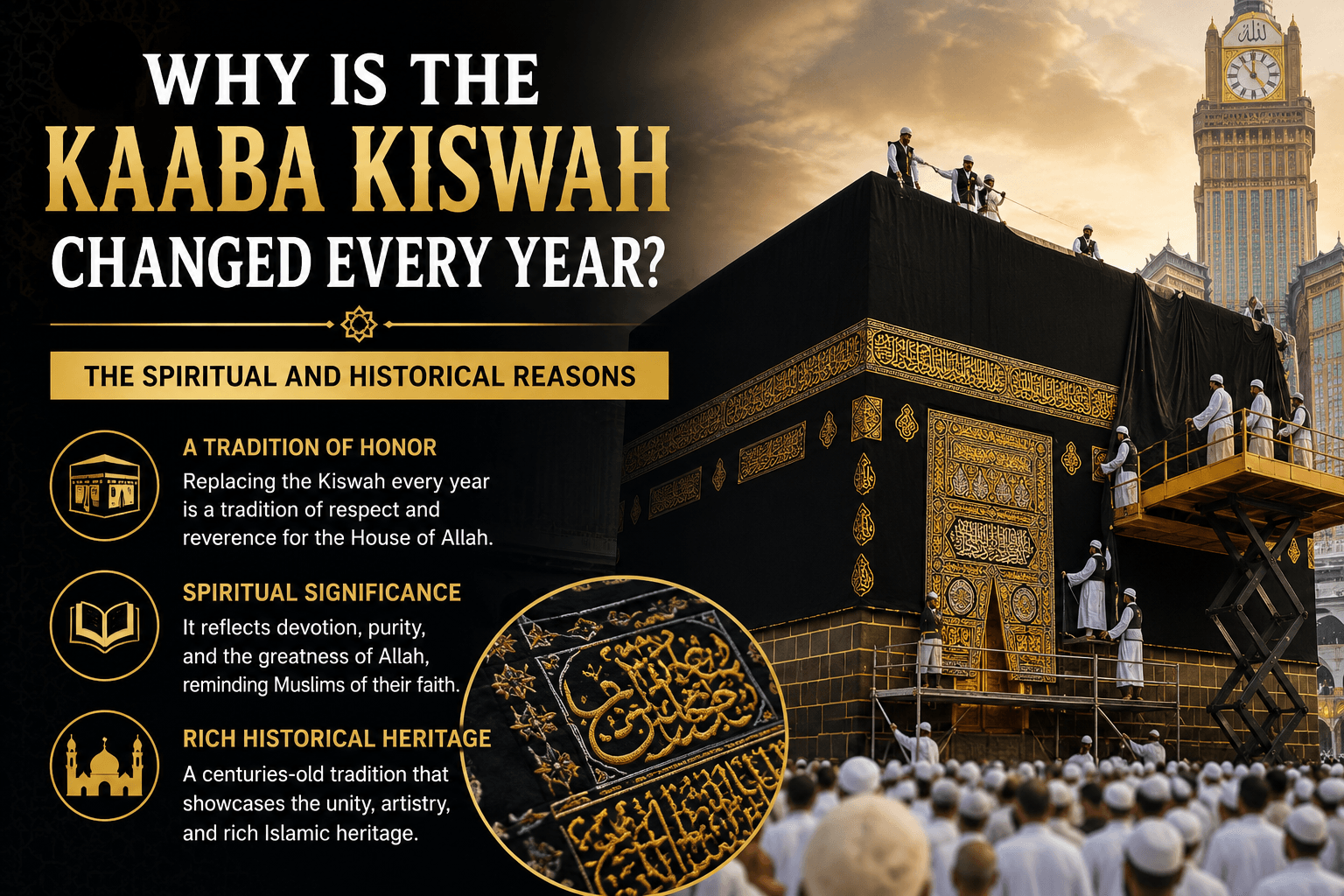
The Holy Kaaba, located in Masjid al-Haram in Makkah, is the most sacred site in Islam and a symbol of unity for Muslims around the world. One of the most remarkable features of the Kaaba is its beautiful black covering, known as the Kiswah.
Many Muslims often ask, Why Is the Kaaba Kiswah Changed Every Year? Understanding Why Is the Kaaba Kiswa Changed Every Year helps us appreciate the rich Kaaba Kiswah history, the significance of Kiswah, and the centuries-old tradition that continues today.
Why Is the Kaaba Kiswah Changed Every Year?
One of the primary reasons the Kiswah is replaced annually is to preserve the beauty and dignity of the Holy Kaaba.
Throughout the year, the Kiswah is exposed to sunlight, dust, weather conditions, and the presence of millions of pilgrims who visit Makkah for Hajj and Umrah. Replacing it ensures that the Kaaba remains beautifully covered and maintained with the highest level of respect.
What Is the Kaaba Kiswah?
The Kiswah is the black silk cloth that covers the Holy Kaaba. It is decorated with Quranic verses embroidered using gold-plated and silver-plated threads.
Its elegant appearance and detailed Arabic calligraphy make it one of the most admired examples of Islamic craftsmanship in the world.
Throughout history, the Kiswah has symbolized devotion, unity, and respect for the House of Allah.
The Fascinating Kaaba Kiswah History
The Kaaba Kiswah history stretches back many centuries.
Historical records show that different rulers and Muslim leaders have overseen the preparation of the Kaaba’s covering. Over time, various colors were used, including white, green, red, and yellow. Eventually, black became the traditional color recognized around the world today.
The tradition of annual replacement has continued for generations and remains one of the most respected practices associated with the Holy Kaaba.
The Significance of Kiswah in Islam
The significance of Kiswah extends far beyond its physical appearance.
For Muslims, the Kiswah represents reverence for the Holy Kaaba and serves as a reminder of faith, worship, and devotion. The Quranic inscriptions embroidered across the cloth remind believers of Allah’s greatness and the importance of spiritual connection.
The Kiswah also symbolizes unity because Muslims worldwide face the Kaaba during their daily prayers.
Why Is the Kaaba Kiswah Changed Every Year? The Spiritual Meaning
When people ask Why Is the Kaaba Kiswah Changed Every Year, they are often looking for the spiritual meaning behind the tradition.
The annual replacement symbolizes renewal, respect, and care for the sacred House of Allah. It reflects the importance Muslims place on preserving one of Islam’s holiest sites with dignity and excellence.
This tradition also reminds believers of the ongoing commitment to maintaining Islamic heritage for future generations.
The Extraordinary Craftsmanship Behind the Kiswah
Creating the Kiswah requires exceptional skill and dedication.
High-quality silk is used to create the fabric, while the Quranic verses are embroidered with gold-plated and silver-plated threads. Skilled artisans spend months completing the intricate details that make the Kiswah one of the finest examples of Islamic art.
Every section reflects remarkable precision, beauty, and craftsmanship.
Why Is the Kaaba Kiswah Changed Every Year and Why Does It Matter?
Understanding Why Is the Kaaba Kiswah Changed Every Year allows Muslims to appreciate one of Islam’s most cherished traditions.
The annual replacement is not simply a ceremonial event. It represents devotion, renewal, and respect for the Holy Kaaba. It also highlights the rich Kaaba Kiswah history and the enduring significance of Kiswah within Islamic civilization.
Conclusion
Now that we understand Why Is the Kaaba Kiswah Changed Every Year, it becomes easier to appreciate the deep spiritual and historical meaning behind this tradition.
The annual replacement of the Kiswah continues to inspire millions of Muslims around the world and remains a powerful symbol of faith, unity, and Islamic heritage.
