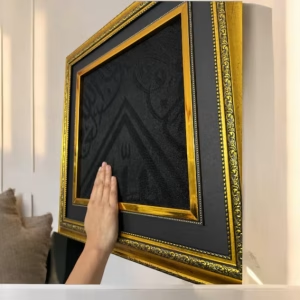
Original Kiswah Pricing Factors: Full Buyer Guide
Original Kiswah pricing factors play a major role in deciding the real value of sacred Kiswah fragments and Islamic heritage decor. Owning a piece of the Kiswah is not only a collector’s pride, but also a deeply emotional experience for many Muslims. These textiles carry a connection to the Holy Kaaba in Makkah, making them more than just fabric—they represent devotion, history, and Islamic identity.
Because prices vary widely, understanding original Kiswah pricing factors helps buyers avoid confusion, protect their investment, and choose a piece that holds genuine spiritual and historical worth.
Why Kiswah Fragment Prices Vary So Much
The market for Kiswah fragments includes everything from small fabric cuts to rare gold-embroidered calligraphy panels. Pricing changes depending on multiple factors, including authenticity, age, embroidery detail, size, condition, rarity, and global demand.
Many people buy Kiswah pieces for:
- Islamic home decor
- Spiritual gifts for loved ones
- Collecting sacred Islamic artifacts
- Preserving heritage for future generations
When you know what truly affects value, you can purchase with clarity and confidence.
Measuring Worth: Original Kiswah Pricing Factors That Matter Most
Below are the key original Kiswah pricing factors that directly influence how much a piece is worth.
1) Authenticity and Verified Source (Most Important)
The most crucial part of Kiswah valuation is authenticity. A genuine Kiswah fragment must have a traceable origin linked to authorized handling or verified distribution.
Authentic pieces usually come with:
- Certification or verification proof
- Official marking or stamp details (if applicable)
- Institutional or documented provenance
- Clear source explanation and record trail
Without verification, it becomes difficult to confirm whether the piece is truly from the Kiswah or simply a decorative look-alike.
This is why authenticity is always ranked number one among original Kiswah pricing factors.
2) Age and Historical Period
Older Kiswah fragments often carry higher value, especially when they belong to rare historical production periods. Kiswah styles have changed over centuries, and collectors prefer pieces connected with specific eras, rulers, or design transitions.
High-value historical preferences often include:
- Pre-modern Kiswah craftsmanship influences
- Early Saudi-era pieces (20th century)
- Ottoman-style calligraphy layouts
- Fragments connected to major renovation phases
- Year-specific Hajj replacement cycles
Age adds heritage depth, and due to limited availability, older pieces are naturally priced higher.
3) Embroidery Depth and Calligraphy Detail
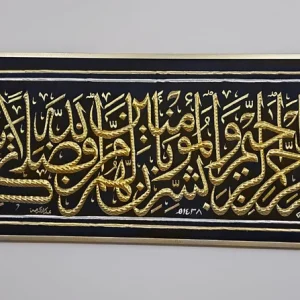
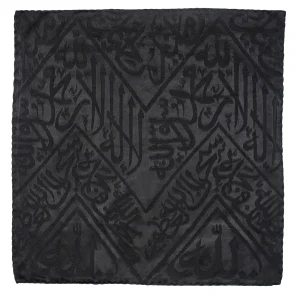
Not every Kiswah fragment has the same level of craft. Some pieces are plain black textile, while others contain Quranic inscriptions and embroidery made with metallic threads.
Higher-value embroidery features include:
- Quranic calligraphy segments
- Gold or silver thread embroidery
- Decorative border patterns
- Text panels with bold stitched design
If the piece contains advanced workmanship, the value increases because these areas take extensive effort to produce.
This is one of the strongest original Kiswah pricing factors in real market pricing.
4) Type of Kiswah Section (Plain vs. Premium Areas)
Different areas of the Kiswah carry different importance and rarity. Certain sections are far more premium because they contain iconic design features and are highly limited.
Highly collectible Kiswah areas include:
- Hizam belt sections (embroidery-rich belt band)
- Sitara sections (door curtain-related fragments)
- Calligraphy panels and border areas
- Embroidered verse blocks
These pieces are usually priced higher compared to plain textile areas because they are rarer and visually more significant.
5) Size of the Fragment and Display Value
Size impacts pricing heavily. Larger Kiswah pieces tend to be more expensive because they are harder to obtain and better for long-term display.
Size-based value differences:
- Small cuts are usually lower priced
- Medium panels have stronger display appeal
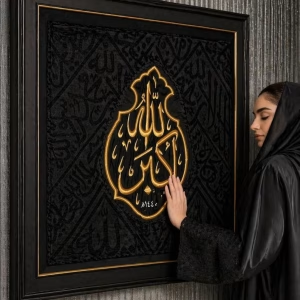
- Large framed pieces carry premium collector value
Collectors often prefer pieces preserved in frames because they remain protected and visually presentable.
6) Condition and Preservation Quality
Condition is a major decision point for buyers. Even a genuine Kiswah piece may lose value if it has damage or poor preservation.
Key condition factors include:
- Fabric strength and overall texture
- Embroidery shine and clarity
- Any tears, fraying, or thread pulling
- Fading due to light exposure
- Storage quality and protection method
A well-preserved Kiswah fragment costs more because it has better longevity and can be displayed safely.
7) Rarity and Limited Availability
Only one full Kiswah is replaced each year, and distribution remains limited. Many pieces are kept as family heirlooms and are rarely resold. Because of this, scarcity directly pushes pricing higher.
Extra-high value rare examples may include:
- Limited ceremonial release pieces
- Unique calligraphy variations
- Rare design sections not commonly sold
- Restricted museum-grade segments
Rarity is a critical part of original Kiswah pricing factors, especially for high-end buyers.
8) Market Demand and Collector Interest
Demand for Kiswah decor and sacred Islamic artifacts has increased globally. Many people now seek meaningful Islamic décor that carries emotional, spiritual, and heritage value.
Pricing may rise due to:
- Higher demand for premium Islamic gifts
- Increased collector competition
- International buyer interest
- Auction influence and resale market trends
Market behavior can affect Kiswah pricing even when the textile itself remains unchanged.
Where to Buy Authentic Kiswah Pieces Safely
Because sacred artifacts attract replicas, it is important to buy from trusted sellers who prioritize verification, safe packaging, and proper preservation.
For verified options, explore:
You can also browse:
Conclusion: Kiswah Value Is More Than a Price
The value of a Kiswah piece is not only financial—it is spiritual, historical, and deeply personal. Still, understanding the original Kiswah pricing factors such as authenticity, age, embroidery complexity, rarity, size, condition, and demand helps buyers make better and safer decisions.
Whether you choose a small sacred fragment or a large embroidered panel, every original Kiswah piece carries a legacy tied to the most honored place in Islam.