
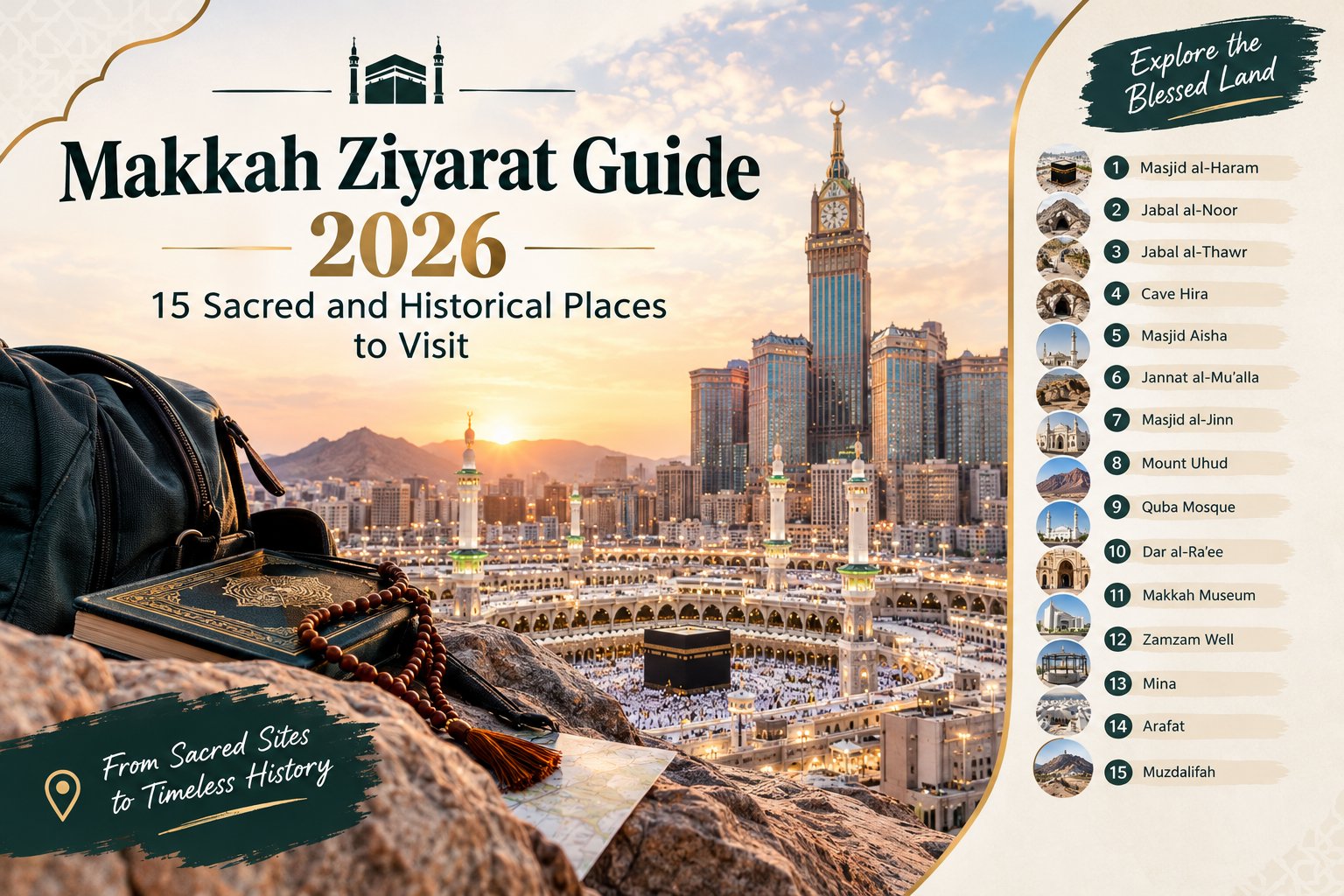
Makkah is one of the most important destinations in the world for Muslims. Beyond performing Umrah or Hajj, many visitors want to explore the historical landmarks connected with Islamic history, the life of Prophet Muhammad ﷺ, and the heritage of the Holy Kaaba. This Makkah Ziyarat Guide 2026 introduces 15 sacred and historical places to consider when planning your visit. With this Makkah Ziyarat Guide 2026, you can discover important Islamic landmarks, plan your ziyarat itinerary, and learn practical tips before visiting these historic places.
From Masjid al-Haram and Jabal al-Noor to historic cemeteries and significant mosques, each location offers a different perspective on Makkah’s past. Some places are accessible for visitors, while others may have restrictions or require checking current local guidance before travelling.
1. Masjid al-Haram
Masjid al-Haram is the heart of Makkah and the location of the Holy Kaaba. Muslims gather here for Tawaf, prayer, Hajj, and Umrah throughout the year. Its immense courtyard, surrounding galleries, and spiritual atmosphere make it the central destination for almost every pilgrim.
The Kaaba is covered with the black Kiswah, featuring Quranic inscriptions and intricate calligraphy. Visitors interested in its craftsmanship can learn about the history of the Kaaba Kiswah and the traditions behind its production.
2. Jabal al-Noor
Jabal al-Noor, meaning Mountain of Light, is associated with the Cave of Hira, where Prophet Muhammad ﷺ received the first revelation according to Islamic tradition. The mountain is located outside the central Haram area.
For visitors following this Makkah Ziyarat Guide 2026, preparation is essential before climbing Jabal al-Noor. Wear suitable footwear, carry water, assess your fitness, and follow current access and safety instructions. Visitors should assess their fitness, wear suitable footwear, carry water, and follow current access and safety instructions.
3. Cave of Hira
The Cave of Hira lies on Jabal al-Noor and holds a special place in Islamic history. It is associated with the beginning of the revelation of the Quran to Prophet Muhammad ﷺ.
The cave is reached by climbing the mountain, so the journey requires preparation. Visitors should respect the site and avoid assuming that access conditions will remain unchanged throughout 2026.
4. Jabal Thawr
Jabal Thawr is historically associated with the migration of Prophet Muhammad ﷺ from Makkah to Madinah. Islamic tradition describes the Prophet ﷺ and Abu Bakr (RA) taking shelter in the Cave of Thawr during the Hijrah.
The mountain is located south of Makkah. As part of the Makkah Ziyarat Guide 2026, Jabal Thawr is an important historical location for visitors who want to learn more about the Hijrah and early Islamic history. Reaching the cave involves a challenging climb, and visitors should consider the weather and physical demands before attempting it.
5. Jannat al-Mu’alla Cemetery
Jannat al-Mu’alla is a historic cemetery in Makkah associated with several important figures from early Islamic history. It is often included in discussions of Makkah’s heritage and the lives of the Prophet’s family and companions.
Access arrangements can vary. Visitors should check local guidance, maintain respectful behaviour, and follow any restrictions around cemetery visits. This Makkah Ziyarat Guide 2026 also highlights the importance of understanding the historical background and visitor guidelines for significant heritage sites.
6. Masjid Aisha (Masjid at-Taneem)
Masjid Aisha, also known as Masjid at-Taneem, is a well-known location for pilgrims who need to enter the state of Ihram for Umrah from outside the Haram boundary.
Many visitors travel here when preparing for an additional Umrah. Before setting out, confirm the guidance that applies to your circumstances and follow instructions from qualified religious authorities.
7. Masjid al-Jinn
Masjid al-Jinn is a historic mosque in Makkah associated with Islamic traditions concerning a group of jinn who listened to the Quran. Its name reflects this association.
The mosque offers an opportunity to learn about religious traditions linked to the city. Visitors should verify access and prayer arrangements locally, as these may change.
8. The Birthplace of Prophet Muhammad ﷺ
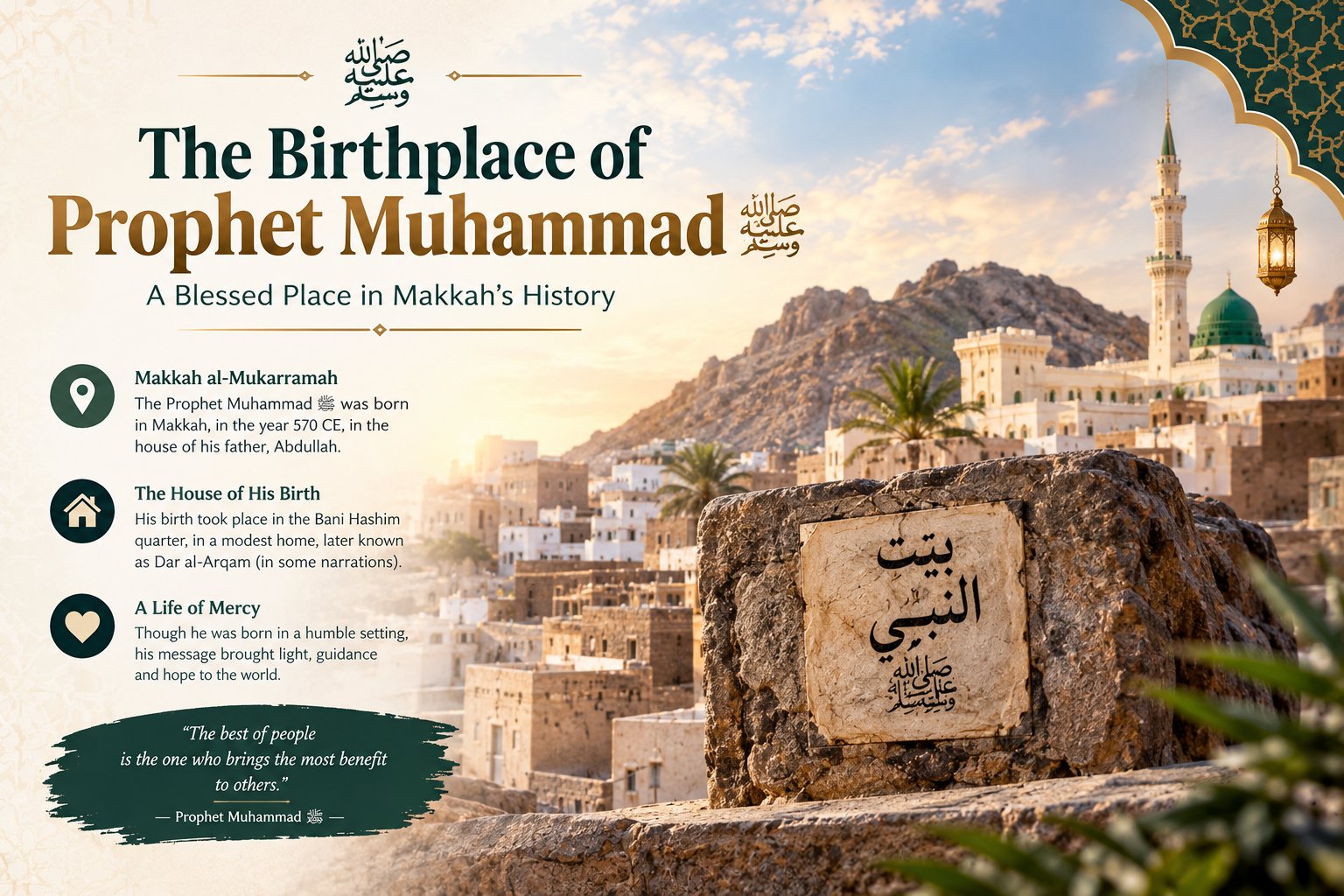
A location traditionally associated with the birthplace of Prophet Muhammad ﷺ is found in the historic area of Makkah. The site has been used for different purposes over time and is often discussed in accounts of the city’s history.
Its current use and visitor access should be confirmed before visiting. Travellers should distinguish historical traditions from details verified by official local sources.
9. Hudaybiyyah
Hudaybiyyah is associated with the Treaty of Hudaybiyyah, an important event in early Islamic history. The agreement between Prophet Muhammad ﷺ and the Quraysh helped shape the relationship between the early Muslim community and Makkah.
The wider area lies outside the city centre. If you plan to visit, arrange transport in advance and confirm the location of the specific historical site you wish to see.
10. Masjid al-Bay’ah
Masjid al-Bay’ah is associated with the pledges made by people from Yathrib, later known as Madinah, to Prophet Muhammad ﷺ. These pledges were important in the development of the early Muslim community.
The mosque is a meaningful stop for visitors interested in the history of Islam. Check the current route and access arrangements before adding it to your itinerary.
11. Mina
Mina is a major site of Hajj, where pilgrims stay during designated days of the pilgrimage and perform specific rites. Its extensive tent city is especially active during the Hajj season. When using this Makkah Ziyarat Guide 2026 to plan a visit to Mina, remember that access may be restricted during Hajj operations.
Access can be controlled, particularly during pilgrimage operations. Visitors should follow official instructions and should not assume that unrestricted sightseeing is possible during Hajj.
12. Arafat and Jabal al-Rahmah
The plain of Arafat is central to Hajj, as standing at Arafat on the designated day is an essential pillar of the pilgrimage. Jabal al-Rahmah is a well-known landmark within the area.
Visitors outside Hajj may wish to learn about its significance, but transport and access arrangements should be checked before travelling. During Hajj, crowd management and official directions take priority.
13. Muzdalifah
Muzdalifah is a sacred area where Hajj pilgrims spend part of the pilgrimage according to established rites. It lies between Arafat and Mina and forms an important stage of the Hajj journey.
Its role is primarily connected with pilgrimage rather than ordinary sightseeing. If you are visiting outside Hajj, check whether a stop is practical and permitted under current local arrangements.
14. The Kiswah Heritage and Manufacturing Tradition
The Kiswah is the textile covering placed over the Holy Kaaba. Its black fabric, embroidered Quranic verses, and gold-coloured calligraphy represent a highly specialised craft tradition.
The King Abdulaziz Complex for Holy Kaaba Kiswah in Makkah is associated with the production of the covering. Access to manufacturing facilities depends on official arrangements, so visitors should not assume that tours are always available.
People interested in Kiswah Kaaba calligraphy, its history, or an authentic Gilafe Kaaba piece can explore educational resources and product information. For those researching where to buy Kaaba Kiswah, authenticity, provenance, and available documentation are important considerations.
15. The Clock Tower and Surrounding Haram District
The Abraj Al Bait Clock Tower complex stands beside Masjid al-Haram and is one of Makkah’s most recognisable modern landmarks. Its shopping, accommodation, and visitor facilities make it a practical point of reference for pilgrims staying near the Grand Mosque.
Although it is not an ancient sacred site, the complex illustrates how Makkah accommodates large numbers of visitors. Check opening times and access rules for individual facilities before planning a visit. When planning your journey, use this Makkah Ziyarat Guide 2026 to balance historical visits with prayer times, rest, and travel arrangements around the Holy City.
Makkah Ziyarat Guide 2026: Practical Tips for Visitors
A successful ziyarat itinerary requires more than choosing locations. Keep these points in mind:
- Check current access rules and transport arrangements before travelling.
- Avoid the hottest part of the day for demanding outdoor walks.
- Wear modest, comfortable clothing and suitable footwear.
- Carry water and protect yourself from the sun.
- Allow extra time for prayer, crowds, and road closures.
- Follow official instructions during Hajj and other busy periods.
- Treat mosques, cemeteries, and historic locations with respect.
Not all 15 places need to be visited in one day. Choose locations based on your available time, mobility, transport, and the current access conditions. Use this Makkah Ziyarat Guide 2026 to organise your visits according to location, available time, transport, and current access restrictions. Planning ahead can help you explore Makkah’s historical landmarks more comfortably.
Frequently Asked Questions
What Does the Makkah Ziyarat Guide 2026 Include?
This Makkah Ziyarat Guide 2026 covers 15 important places, including Masjid al-Haram, Jabal al-Noor, Jannat al-Mu’alla, Mina, Arafat, and other historical landmarks. It also shares practical tips to help visitors plan their journey.
How many days are needed for Makkah Ziyarat?
One or two days may cover several nearby locations, while a longer stay allows more time for sites outside central Makkah. Your plan depends on transport, access, and pilgrimage commitments. This Makkah Ziyarat Guide 2026 can help you prioritise locations based on your schedule, transport, and accessibility needs.
Can I visit these places during Umrah?
Many locations may be visited outside restricted periods, but access is not guaranteed at every site. Check local guidance before travelling.
Can I buy an authentic Kaaba Kiswah piece online?
Availability depends on the seller and the specific item. If you are considering a purchase, review provenance, product measurements, condition, and supporting documentation. Visit Kiswah Islamic Store to explore its available collection and product information.
Conclusion
Our Makkah Ziyarat Guide 2026 highlights 15 places connected with Islamic history, pilgrimage, and the rich heritage of the Holy City. From Masjid al-Haram and the Cave of Hira to Arafat, Mina, and the Kiswah tradition, each location offers a different way to understand Makkah’s significance. Whether you are visiting for Umrah or exploring historical landmarks, this Makkah Ziyarat Guide 2026 can help you prepare a more informed and organised itinerary.
Plan thoughtfully, confirm current access arrangements, and give yourself time to appreciate the history behind each destination. To explore the heritage and craftsmanship of the Kaaba Kiswah, visit Kiswah Islamic Store and review the available authentic Kiswah products.
