
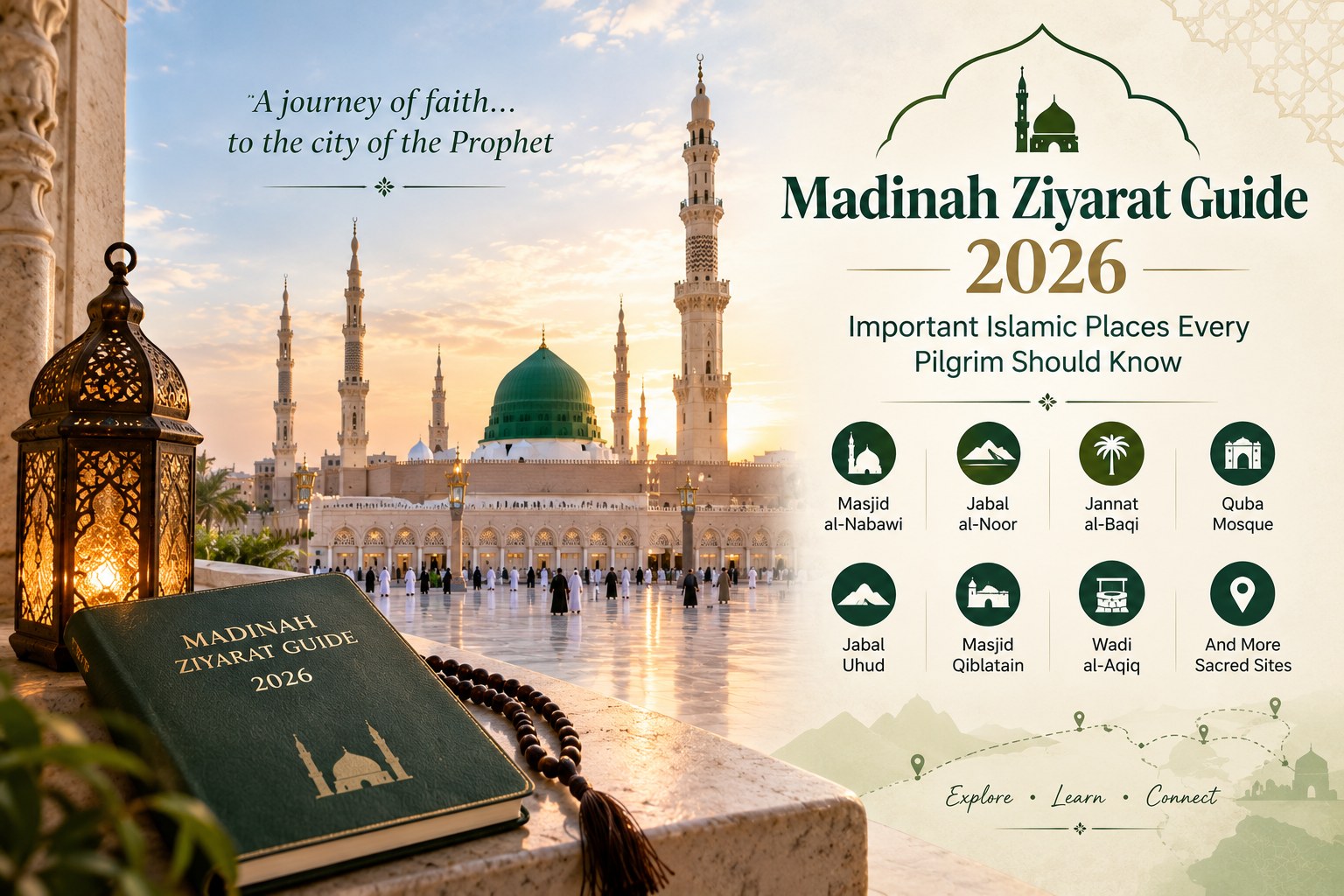
Madinah is one of the most meaningful destinations for Muslims visiting Saudi Arabia. Known for its connection with Prophet Muhammad ﷺ, the city welcomes pilgrims who wish to pray at its sacred mosque, learn about Islamic history and visit places associated with the early Muslim community.
Planning your journey in advance can make your visit more organised and rewarding. This Madinah Ziyarat Guide 2026 introduces important Islamic landmarks, explains their historical significance and shares practical advice for pilgrims preparing for their stay.
Why Is Madinah Important in Islam?
Madinah, formerly known as Yathrib, became a central place in Islamic history after Prophet Muhammad ﷺ migrated there from Makkah. This migration, known as the Hijrah, marked a major turning point for the Muslim community.
The city became a centre of worship, learning and community life. Many events connected with the Prophet’s ﷺ life took place here, and several locations remain important to Muslims because of their historical and religious associations.
Visitors should remember that Ziyarat is an opportunity to learn, reflect and appreciate Islamic heritage. Visiting historical sites is not a replacement for obligatory worship, and pilgrims should follow authentic Islamic guidance during their journey.
1. Al-Masjid an-Nabawi: The Prophet’s Mosque
Al-Masjid an-Nabawi is the central destination for many people undertaking Madinah Ziyarat. Established by Prophet Muhammad ﷺ after his arrival in the city, the mosque has expanded considerably over the centuries.
Muslims visit to offer Salah, recite the Quran and send blessings upon the Prophet ﷺ. The mosque’s distinctive Green Dome is a familiar feature of Madinah’s skyline.
Pilgrims hoping to pray inside should check current access arrangements, entry instructions and any required permits through official Saudi platforms. Arrive with enough time for security procedures, keep walkways clear and respect the mosque’s quiet atmosphere.
2. Jannat al-Baqi Cemetery
Jannat al-Baqi is a historic cemetery situated near Al-Masjid an-Nabawi. Many prominent members of the early Muslim community, including companions of the Prophet ﷺ and members of his family, are buried there.
Its proximity to the Prophet’s Mosque makes it a significant location in Madinah’s religious history. Access arrangements can change, so visitors should confirm whether entry is permitted during their visit.
Pilgrims should maintain respectful behaviour, avoid disturbing others and follow established Islamic teachings when making supplications. The visit can provide an opportunity to reflect on mortality and the importance of living with faith and good character.
3. Masjid Quba: A Mosque With Early Islamic History
Masjid Quba is among the most historically significant mosques in Madinah. It is associated with the Prophet’s ﷺ arrival in the area during the Hijrah and the establishment of the early Muslim community.
Many pilgrims include this mosque in their Madinah Ziyarat itinerary to pray and learn about its place in Islamic history. Its architecture and surrounding neighbourhood also offer a glimpse into how the city has developed.
Plan your visit around prayer times and local arrangements. Dress modestly, keep the mosque clean and follow instructions from staff, particularly during busy pilgrimage periods.
4. Mount Uhud and the Battle of Uhud Site
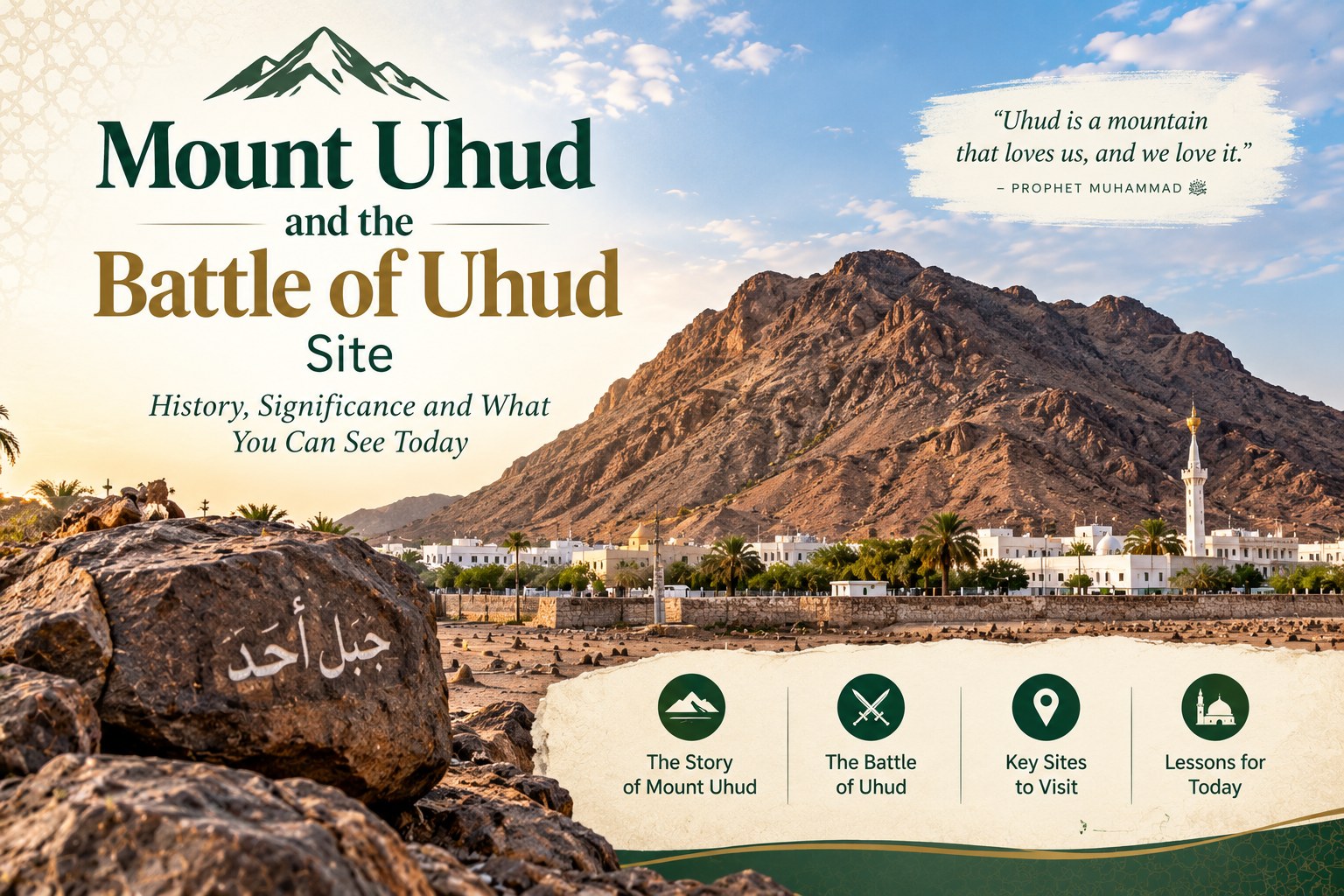
Mount Uhud is closely connected with the Battle of Uhud, which took place during the early years of Islam. The battle involved Prophet Muhammad ﷺ and his companions, and its lessons are remembered in Islamic history.
The surrounding area is visited by pilgrims interested in learning about the sacrifices and experiences of the early Muslim community. The site can help visitors understand the historical challenges faced by Muslims during that period.
Wear comfortable footwear if you plan to walk around the area, carry drinking water in warm weather and avoid climbing restricted sections. Follow safety notices and respect the site and other visitors.
5. The Archery Hill Area
The Archery Hill area is associated with the positions occupied by Muslim archers during the Battle of Uhud. Their role is frequently discussed when explaining the events and lessons of the battle.
Visitors often explore this area alongside Mount Uhud. Rather than treating the stop as only a sightseeing opportunity, take time to understand the historical account and the importance of discipline, patience and obedience.
Conditions can be hot, particularly during warmer months. Choose suitable clothing, avoid strenuous activity when temperatures are high and follow directions from local authorities.
6. Masjid al-Qiblatayn
Masjid al-Qiblatayn, meaning the Mosque of the Two Qiblas, is associated with the change in the direction of Muslim prayer from Jerusalem towards the Kaaba in Makkah.
The event holds an important place in Islamic tradition. The mosque is therefore a meaningful stop for visitors interested in the development of Islamic worship and the early Muslim community.
Before travelling, check the current visiting arrangements and prayer facilities. As with other religious sites, maintain respectful conduct and avoid interrupting worshippers.
7. The Seven Mosques Area
The area commonly known as the Seven Mosques is associated with historical locations connected with the Battle of the Trench, also called the Battle of Khandaq. The battle was a significant event in the defence of Madinah.
The name refers to a group of small mosques in the area, although descriptions and counting can vary. Pilgrims interested in the events surrounding the battle may find this location useful when studying the city’s history.
Allow time for travel between stops, and verify which locations are accessible before setting out. Not every site has the same facilities or visiting arrangements.
Practical Tips for Madinah Ziyarat in 2026
A little preparation can help you spend more time learning and less time dealing with travel problems.
- Check official updates: Confirm mosque access, permits, transport arrangements and opening information before visiting.
- Choose suitable timings: Early mornings or cooler parts of the day may make outdoor visits more comfortable.
- Plan nearby locations together: Group sites by area to reduce unnecessary travel across Madinah.
- Dress appropriately: Wear modest clothing suitable for religious settings and weather conditions.
- Stay hydrated: Carry water, particularly when visiting outdoor locations in warm weather.
- Respect local rules: Follow instructions from mosque staff, security personnel and official guides.
- Keep expectations realistic: Some areas may have restricted access or temporary closures, so maintain flexibility in your itinerary.
If you are travelling during a busy Umrah period or school holidays, allow extra time for traffic and crowds.
What Should You Know Before Your Madinah Visit?
Madinah Ziyarat does not need to feel rushed. You can choose the locations most relevant to your interests, whether you want to focus on mosques, important events from the Prophet’s ﷺ life or the history of the early Muslim community.
A knowledgeable guide may help explain historical context, but visitors should distinguish established information from unverified stories. For religious questions, consult trusted scholars and reliable Islamic sources.
If your trip also includes Makkah, consider planning enough time for both cities instead of filling every day with activities. Rest, prayer and personal reflection are important parts of the journey.
Frequently Asked Questions About Madinah Ziyarat
How many days are enough for Madinah Ziyarat?
The time required depends on your schedule and the number of places you want to visit. One or two days may cover several major landmarks, while a longer stay allows more time for prayer and reflection.
Is Masjid Quba worth including in the itinerary?
Masjid Quba has a significant place in Islamic history and is commonly included in Madinah visits. Check local access arrangements before travelling.
Can I visit Mount Uhud and Masjid Qiblatayn on the same day?
Many visitors plan both stops together, depending on transport, available time and current access conditions. Leave room for delays and prayer times.
Should I book a Madinah Ziyarat tour?
A guided tour can simplify transport and provide historical explanations. Before booking, confirm the itinerary, guide credentials, transport details and total cost.
Conclusion
Madinah offers pilgrims an opportunity to explore important places connected with the life of Prophet Muhammad ﷺ and the early Muslim community. From Al-Masjid an-Nabawi and Masjid Quba to Mount Uhud and Masjid al-Qiblatayn, each location has a story worth understanding before you arrive.
Use this Madinah Ziyarat Guide 2026 to plan your visits, check current travel arrangements and approach every site with respect. A thoughtful itinerary can help you balance sightseeing with prayer, learning and reflection.
Preparing for your wider Islamic journey? Visit Kiswah Islamic Store to explore its collection of Islamic products and meaningful gifts. Browse the store and review each product’s details to find items suitable for your home or as gifts for loved ones.
