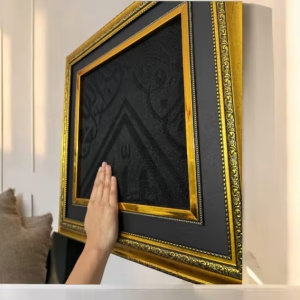
Kiswah styles through the centuries reveal how Islamic devotion, sacred symbolism, and artistic excellence developed over time. The Kiswah is the revered cloth that covers the Holy Kaaba, and its appearance has evolved over more than a thousand years. From simple fabric coverings to detailed calligraphy and gold embroidery, every stage in Kiswah history reflects the strength of Islamic tradition and the refinement of Muslim craftsmanship.
Understanding Kiswah styles through the centuries helps us appreciate the Kiswah as more than a textile. It represents spiritual unity, historical legacy, and Islamic heritage preserved through generations.
Early Kiswah Origins: Simple Fabric, Pure Meaning
In the earliest stages, the Kiswah was made using basic cloth such as Yemeni textiles and plain cotton. Even before Islam, tribes would contribute coverings for the Kaaba as a sign of honor. Later, Islamic practice continued the renewal of the Kiswah regularly, highlighting the importance of purity and respect for the sacred House of Allah.
Key Features of Early Kiswah Designs
- Cotton and Yemeni fabric were commonly used
- No heavy decoration or complex embroidery
- Light shades such as white and off-white were common
- The purpose was protection and sacred presentation
At this stage, Kiswah styles through the centuries begin with simplicity, where religious meaning was valued more than visual detail.
Umayyad and Abbasid Era: The First Artistic Improvements
As Islamic civilization spread, Kiswah production became more organized and refined. Under the Umayyads and Abbasids, the Kiswah gradually moved beyond plain cloth and began developing features that reflected artistic identity.
Major Advancements in This Era
- Improved dyeing methods introduced darker colors
- Early inscriptions began appearing
- Stronger fabrics and better materials were used
- Production became more structured under supervision
This period shows a turning point in Kiswah styles through the centuries, where the cloth began reflecting a stronger visual presence while remaining sacred in purpose.
Mamluk and Ottoman Period: The Golden Era of Kiswah Art
The Mamluk and Ottoman centuries are often considered the most visually influential era in Kiswah design. Major effort and resources were dedicated to making the Kiswah a masterpiece of Islamic art.
What Made This Era Iconic?
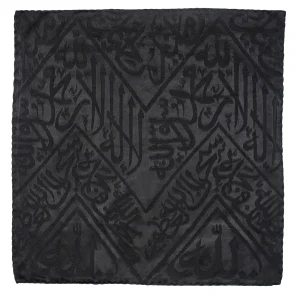
- The Kiswah became widely recognized in black
- Quranic verses were embroidered in prominent layouts
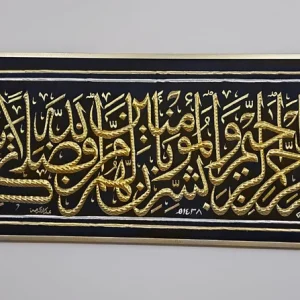
- Gold and silver threadwork became a signature feature
- The famous Hizam belt was developed and perfected
- Specialized production workshops gained elite status
This phase is one of the most celebrated chapters of Kiswah styles through the centuries, because it established many design elements still associated with the Kiswah today.
Modern Kiswah Style: Precision, Tradition, and Consistency
In the modern era, Saudi Arabia became responsible for Kiswah production with highly advanced systems. Today, the Kiswah continues to preserve traditional embroidery while benefiting from improved tools for finishing and durability.
Key Traits of the Modern Kiswah
- Traditional hand embroidery remains an essential process
- Precision tools improve stitching and fabric alignment
- Gold and silver threads are widely used
- Quranic calligraphy is produced with high accuracy
- The Kiswah is renewed every year in Dhul Hijjah
Modern craftsmanship proves that Kiswah styles through the centuries can evolve technically without losing sacred authenticity.
Symbolism Across Kiswah Styles Through the Centuries
The Kiswah has changed in fabric and design, but its spiritual purpose never changed.
The Kiswah Continues to Symbolize
- Honor and respect for the House of Allah
- Unity of Muslims worldwide
- Preservation of Islamic heritage and sacred art
- Continuation of historical Islamic tradition
Across Kiswah styles through the centuries, the meaning remained constant even when artistic form transformed.
Why Kiswah Styles Through the Centuries Matter Today
Learning about Kiswah styles through the centuries deepens spiritual understanding and historical appreciation. It also helps collectors and admirers recognize what creates value in Kiswah textiles—such as rare embroidery work, calligraphy detail, and heritage importance.
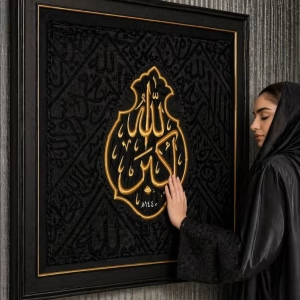
Today, many people keep Kiswah-inspired Islamic decor or collect authentic Kiswah fragments for their homes. These pieces are admired for their sacred connection to Makkah and the timeless beauty of Islamic craftsmanship.