
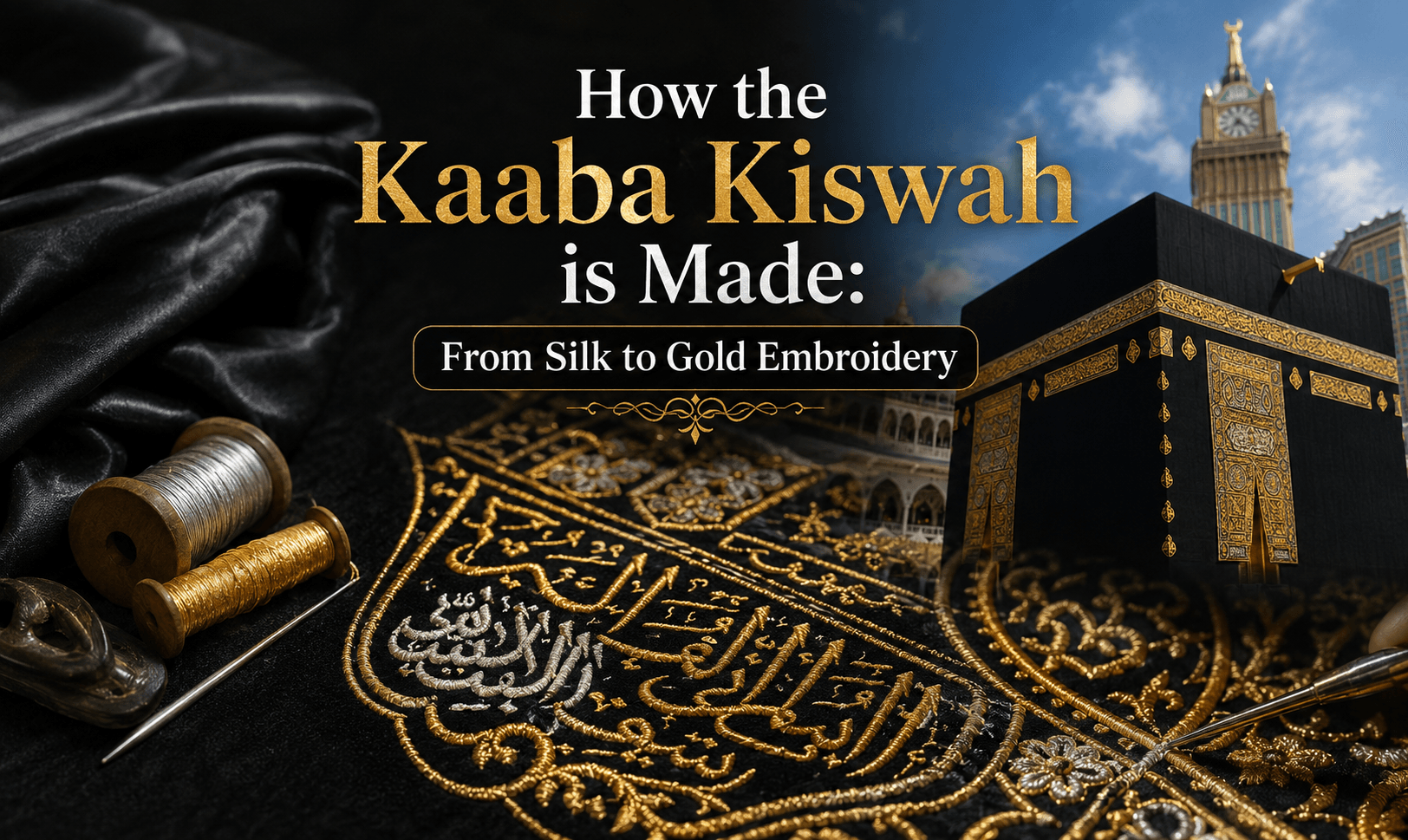
The Kaaba Kiswah is one of the most recognizable symbols of Islamic heritage and devotion. Draped over the Holy Kaaba in Makkah, this magnificent black cloth reflects centuries of craftsmanship, faith, and artistic excellence. Every year, a new Kiswah is prepared with exceptional care before replacing the existing covering during the annual Hajj season.
Many Muslims admire the beauty of the Kiswah but wonder how the Kaaba Kiswah is made. From selecting premium silk to weaving intricate Quranic verses with gold and silver-plated threads, every stage of its creation requires precision and dedication.
In this article, we’ll explore the remarkable journey of the Kaaba Kiswah—from raw silk to its breathtaking gold embroidery.
What Is the Kaaba Kiswah?
The Kaaba Kiswah is a beautifully crafted black silk covering placed over the Holy Kaaba, the most sacred place in Islam. It features beautifully embroidered Quranic verses, Islamic calligraphy, and decorative patterns created using gold and silver-plated threads.
The Kiswah is not just a decorative covering—it symbolizes respect, unity, and reverence for the House of Allah.
Selecting the Finest Silk
The process begins with choosing high-quality natural silk. Only premium silk is used to ensure durability, smooth texture, and the luxurious appearance expected of the Kaaba’s covering.
Thousands of meters of silk fabric are carefully inspected before production begins. The quality of the silk is essential because it must withstand the climate of Makkah while maintaining its elegant look throughout the year.
Dyeing the Silk Black
Although natural silk is light in color, the Kaaba Kiswah is famous for its deep black appearance.
The silk is thoroughly cleaned before being dyed using specialized techniques that ensure:
- Rich, even black color
- Long-lasting finish
- Resistance to fading
- Smooth texture
The dyeing process is carefully monitored to achieve consistency across every panel.
Weaving the Fabric
After dyeing, the silk is woven into large fabric panels using advanced weaving techniques.
Each section must meet strict quality standards for:
- Strength
- Thickness
- Uniform texture
- Perfect alignment
Even the smallest imperfections are corrected before the fabric moves to the next stage.
Designing the Quranic Calligraphy
One of the most beautiful aspects of the Kaaba Kiswah is its elegant Arabic calligraphy.
Experts create detailed patterns featuring selected Quranic verses, including phrases glorifying Allah and verses associated with the sacred House.
Before embroidery begins, every design is carefully prepared and transferred onto the silk panels with precision.
Gold and Silver Embroidery
This is the stage that transforms the Kiswah into a masterpiece.
Skilled artisans embroider the Quranic verses using gold and silver-plated threads. Every letter is stitched by combining traditional craftsmanship with modern techniques to ensure exceptional detail.
The embroidery includes:
- Quranic verses
- The Shahada
- Islamic decorative motifs
- Ornamental borders
The raised embroidery gives the Kiswah its distinctive and luxurious appearance.
Sewing the Individual Panels Together
The Kaaba Kiswah is made from multiple large fabric panels rather than a single piece.
Each embroidered panel is carefully joined together using strong stitching methods to ensure perfect alignment.
Precision is essential because every section must fit the exact dimensions of the Holy Kaaba.
Quality Inspection
Before the Kiswah is installed, every panel undergoes detailed quality checks.
Specialists inspect:
- Embroidery accuracy
- Fabric quality
- Thread strength
- Color consistency
- Seam durability
- Overall craftsmanship
Only after passing these inspections is the Kiswah considered ready.
Installation on the Holy Kaaba
The new Kiswah is traditionally installed during the Hajj season.
The previous Kiswah is respectfully removed, and the new covering is carefully placed over the Kaaba by a trained team.
This annual replacement symbolizes renewal while preserving one of Islam’s most treasured traditions.
Why the Kaaba Kiswah Is So Special
The Kaaba Kiswah is admired not only for its beauty but also for what it represents.
It reflects:
- Deep respect for the House of Allah
- Extraordinary Islamic craftsmanship
- Centuries of artistic tradition
- Spiritual unity among Muslims worldwide
Every thread tells a story of faith, dedication, and excellence.
The Journey of Creating a New Kaaba Kiswah
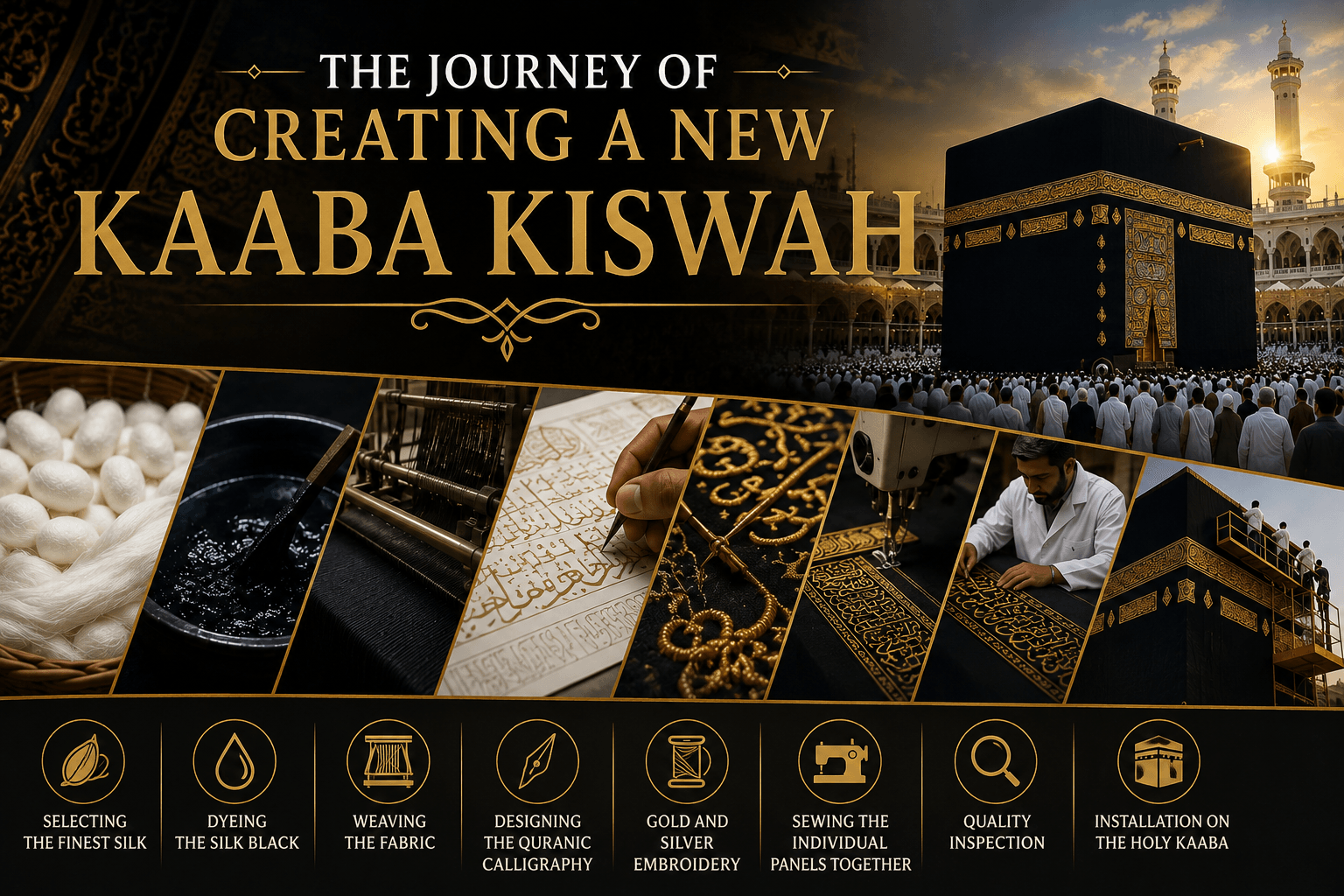
Creating a new Kaaba Kiswah is a detailed process that takes many months.
The production involves:
- Silk preparation
- Dyeing
- Weaving
- Embroidery
- Sewing
- Inspection
- Final installation preparations
Dozens of skilled artisans, technicians, designers, and quality specialists work together to complete each annual Kiswah.
Interesting Facts About the Kaaba Kiswah
- A new Kiswah is produced every year.
- Premium natural silk is used for its fabric.
- Quranic verses are embroidered using gold and silver-plated threads.
- Each panel is individually crafted before being assembled.
- The embroidery is among the finest examples of Islamic textile art.
- The Kiswah is one of the most respected and recognizable symbols in the Muslim world.
Caring for Authentic Kiswah Pieces
Some authentic sections of older Kiswahs are preserved and displayed in museums or owned by collectors.
Careful preservation helps maintain an authentic Kaaba Kiswah piece.
- Keep it away from direct sunlight.
- Store it in a clean, dry environment.
- Handle it with clean hands or gloves.
- Use museum-quality framing for display.
- Avoid excessive humidity or moisture.
Proper care helps preserve its beauty for generations.
Frequently Asked Questions
Why is the Kaaba Kiswah black?
Black has been the traditional color of the Kaaba Kiswah for centuries, giving it its distinctive and recognizable appearance.
Is the embroidery made from real gold?
The embroidery traditionally uses gold and silver-plated threads, creating the Kiswah’s iconic luxurious finish.
How often is the Kaaba Kiswah replaced?
A new Kiswah is installed once every year during the Hajj season.
Can people buy authentic Kaaba Kiswah pieces?
Yes. Genuine Kaaba Kiswah pieces are extremely rare, but they can be purchased from trusted and reputable sellers. If you’re looking for authentic Kaaba Kiswah pieces, you can explore the collection available at Kiswah Islamic Store, which offers carefully sourced Kiswah products through its official website:
Why is the Kiswah considered valuable?
Its spiritual importance, exceptional craftsmanship, historical significance, and limited availability make it one of the most treasured Islamic textiles.
Conclusion
The journey of the Kaaba Kiswah from fine silk to intricate gold embroidery is a remarkable blend of artistry, devotion, and tradition. Every stage—from selecting premium silk and dyeing it black to embroidering Quranic verses with gold and silver-plated threads—reflects an unwavering commitment to excellence.
More than just a covering for the Holy Kaaba, the Kiswah represents the unity of Muslims around the world and the enduring legacy of Islamic craftsmanship. Understanding how it is made allows us to appreciate not only its stunning appearance but also the dedication and reverence behind every stitch.
