
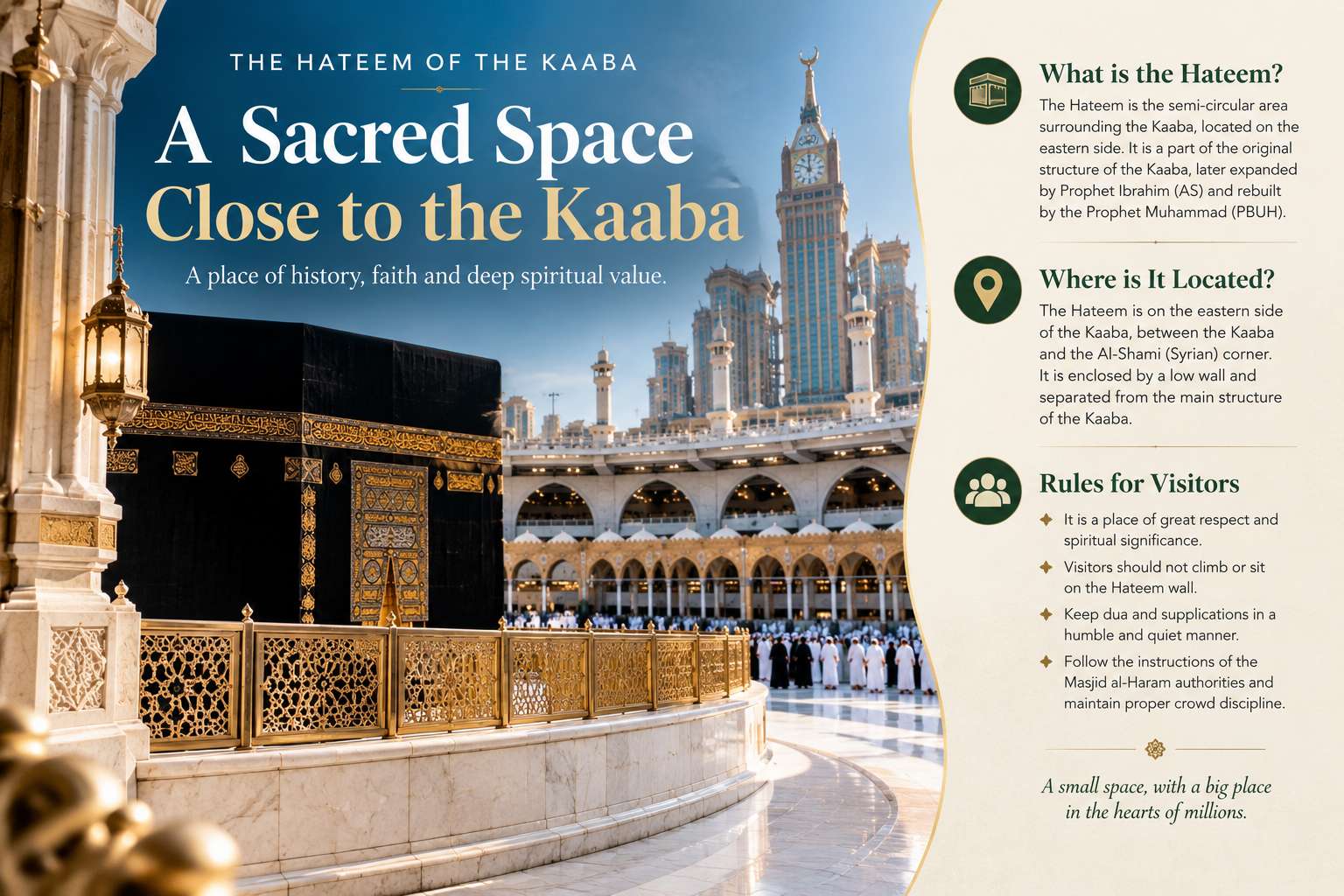
The Hateem of the Kaaba is a distinctive semicircular enclosure beside the Holy Kaaba in Makkah. Also known as Hijr Ismail, this area holds special significance because historical accounts connect it with the original foundations of the Kaaba. Visitors performing Hajj and Umrah often want to understand its location, religious importance, history, and the guidelines they should follow when entering it.
Learning about the Hateem offers a deeper understanding of the Kaaba’s architecture and Islamic heritage. It also helps pilgrims prepare for a respectful visit to one of the most historically significant places within Masjid al-Haram.
What Is the Hateem of the Kaaba?
The Hateem is the curved, low-walled enclosure situated beside the northern side of the Kaaba. Its marble boundary distinguishes the space from the surrounding courtyard, making it easy to recognise during a visit.
The names Hateem and Hijr Ismail are commonly used for this area, although historical and scholarly discussions sometimes distinguish the enclosure from the space within it. Official Saudi sources explain that the area marks part of the foundations associated with Prophet Ibrahim and Prophet Ismail.
Unlike the black textile covering the Kaaba, the Hateem is an architectural feature. Its curved wall and open space make it an important landmark for pilgrims exploring the surroundings of the Sacred House.
Where Is Hateem Located?
The Hateem lies along the northern side of the Holy Kaaba, within Masjid al-Haram in Makkah, Saudi Arabia. Its semicircular marble wall stands opposite the Kaaba’s northern wall.
Visitors can identify the area by looking for the curved enclosure next to the Kaaba. The golden Mizab al-Rahma, or Spout of Mercy, projects from the roof above this general area and directs rainwater away from the roof.
Remember these nearby landmarks:
- Hateem: The curved enclosure beside the Kaaba.
- Hijr Ismail: The name commonly used for the area associated with the original foundations.
- Mizab al-Rahma: The golden roof spout positioned above the area.
- Kaaba Kiswah: The textile covering that surrounds the exterior walls of the Kaaba.
Knowing these landmarks can help visitors understand the layout of the Kaaba without confusing its separate architectural features.
Why Is Hateem Important in Islam?
The Hateem is significant because Islamic tradition connects the enclosed area with the original structure raised by Prophet Ibrahim and Prophet Ismail. When the Quraysh rebuilt the Kaaba before the beginning of Prophet Muhammad’s prophethood, they left part of the earlier foundations outside the rebuilt walls.
This history is supported by an authentic narration in Sahih Muslim concerning the Prophet’s wish to rebuild the Kaaba according to Ibrahim’s foundations. The reconstruction did not take place at that time, partly to avoid creating difficulties for people who had recently embraced Islam.
As a result, the Hateem remains closely connected with the history and original dimensions of the Sacred House.
Is the Hateem Part of the Kaaba?
A commonly asked question is whether the Hateem belongs to the Kaaba itself. According to established Islamic explanations, the space inside the enclosure includes the portion associated with the original foundations that was left outside the structure rebuilt by the Quraysh.
This distinction matters during Tawaf. Pilgrims must circumambulate outside the Hateem enclosure because passing through it would mean leaving part of the Kaaba’s original area outside the circuit.
Understanding this point helps visitors perform their pilgrimage correctly. If you are unsure about the details of Tawaf, consult a knowledgeable religious guide or qualified scholar before beginning your rituals.
Can You Pray Inside the Hateem?
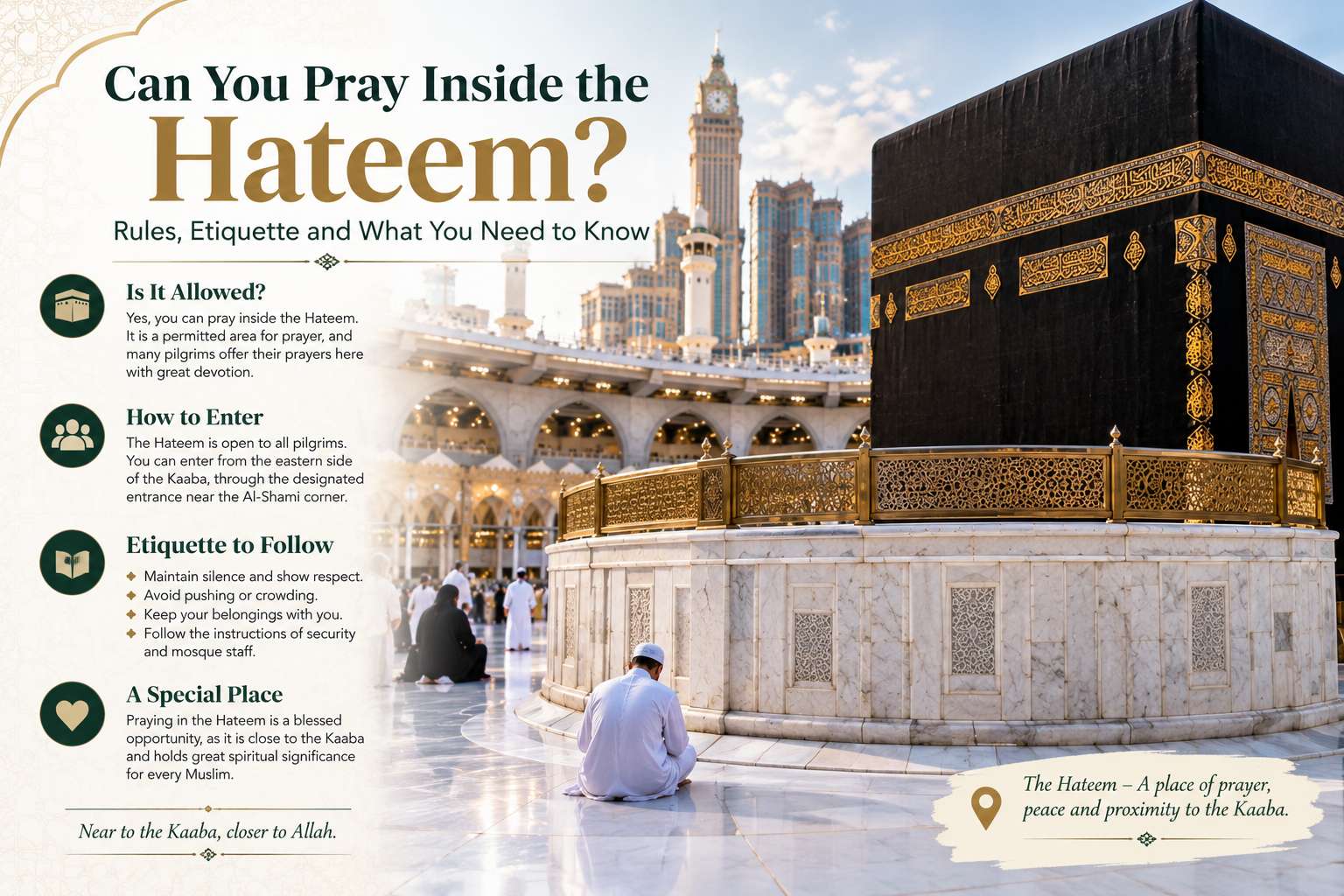
Muslims commonly seek an opportunity to pray inside Hijr Ismail because Islamic traditions recognise the religious significance of this area. Prayer there is associated with praying within the original area of the Kaaba.
However, access depends on crowd management and the instructions issued by the authorities responsible for Masjid al-Haram. Visitors should never push through other worshippers or assume they can enter whenever they wish.
If entry is unavailable, you can still pray elsewhere in the Grand Mosque. Sincere worship does not require forcing access to a particular location.
Rules Visitors Should Follow at the Hateem
A visit to the Hateem should be guided by patience, consideration, and respect for other worshippers. Entry arrangements may change according to crowd levels and official management decisions.
Keep these practical points in mind:
- Follow official entry instructions. Use the designated access points and obey directions from mosque staff.
- Check current visiting arrangements. Entry periods for men and women may be scheduled separately, so verify the latest information before visiting.
- Avoid pushing or crowding. Never endanger another pilgrim to reach the enclosure.
- Keep your visit considerate. If access is allowed, follow any time limits and move along when instructed.
- Maintain respectful behaviour. Be mindful of other worshippers, keep walkways clear, and maintain a calm, respectful atmosphere.
- Complete Tawaf correctly. Walk outside the Hateem enclosure when circumambulating the Kaaba.
These practices help protect visitors while allowing worship to continue smoothly. Official announcements from the authorities responsible for the Two Holy Mosques should take priority over older travel advice.
What Is the Difference Between the Hateem and the Kaaba Kiswah?
The Hateem and the Kiswah are two different features associated with the Holy Kaaba. The Hateem is the semicircular enclosure beside the building, while the Kiswah is the textile covering placed over the Kaaba’s exterior.
The Kaaba kiswa is known for its detailed embroidery, carefully arranged inscriptions, and specialised textile craftsmanship. Its Kiswah kaaba calligraphy is especially notable for the decorative Quranic inscriptions created by skilled artisans.
People interested in Islamic heritage may also research a Gilafe kaaba piece to learn about genuine Kiswah textiles and their origins. Before choosing a piece, look into its origin, verify any available certificates or records, and check its condition and description carefully.
Can You Buy an Authentic Kaaba Kiswah Piece?
People researching genuine Kiswah textiles often ask, Where to buy kaaba kiswah or whether they can purchase an authentic piece online. Availability depends on the specific item and its source, so buyers should carefully review its history and documentation before making a decision.
If you are comparing the Original kaaba kiswah price, remember that dimensions, condition, provenance, and certification can influence the value of an individual piece. A detailed description and reliable supporting information are more useful than price alone.
Kiswah Islamic Store offers an online place to explore its available Islamic textile collection and learn more about Kiswah heritage.
Explore Kaaba Kiswah Heritage at Kiswah Islamic Store
The Hateem offers a meaningful connection to the early history of the Kaaba and the foundations associated with Prophet Ibrahim and Prophet Ismail. Understanding its location, significance, and visitor guidelines can help pilgrims approach this historic area with greater knowledge and respect.
Visit Kiswah Islamic Store to explore available authentic Kiswah pieces and discover more about their craftsmanship and heritage. Whether you are preparing for Umrah, studying the architecture of the Holy Kaaba, or learning about genuine Islamic textiles, understanding the story behind these features can make your exploration of Islamic heritage more meaningful.
