
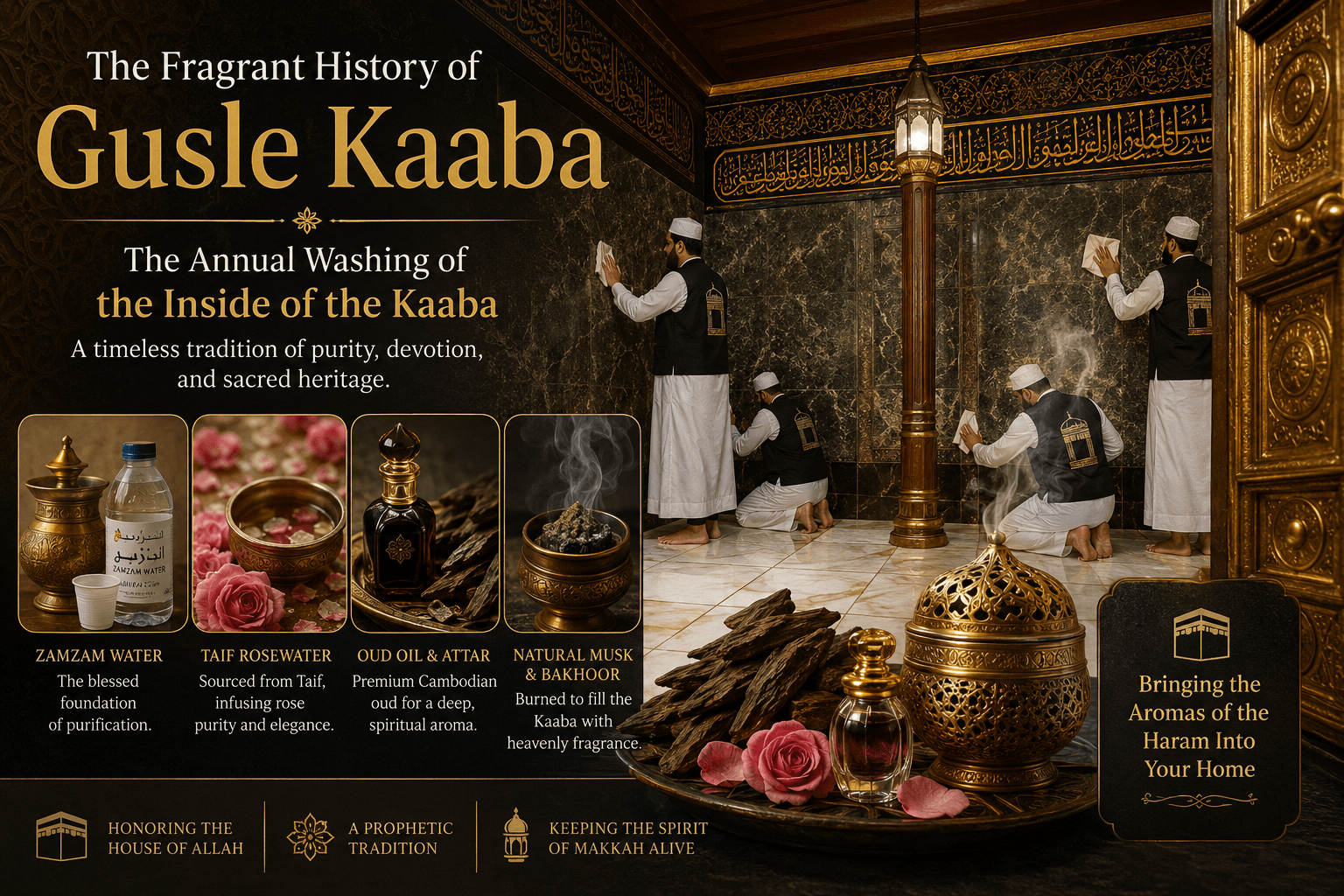
Every year, a profound spiritual event takes place within the walls of Masjid al-Haram that captures the hearts of millions of Muslims worldwide. Known as Gusle Kaaba (Ghusl al-Kaaba), the ceremonial washing of the inside of the Kaaba is a timeless tradition of deep reverence, purity, and heritage. Conducted on behalf of the Custodian of the Two Holy Mosques, this sacred event transforms the interior of Islam’s holiest sanctuary into a beautifully fragrant space, bridging historical prophetic traditions with the modern-day preservation of Islamic culture.
For believers living in the UK, US, or Saudi Arabia, watching or reading about the washing ceremony evokes an overwhelming sense of longing and devotion. Understanding the details of what happens behind closed golden doors offers a glimpse into a ritual that few get to witness in person.
The Prophetic Roots of the Washing Ceremony
The tradition of washing the Holy Kaaba dates back centuries to the conquest of Makkah. When Prophet Muhammad (peace be upon him) entered the Kaaba, he removed the idols and personally cleansed the interior walls and floors, establishing a Sunnah of maintaining the utmost purity and respect for the House of Allah.
Historically, this cleaning occurred twice a year. However, under current regulatory schedules overseen by the General Authority for the Care of the Affairs of the Grand Mosque, the extensive ceremonial deep-cleaning is systematically performed once a year, usually on the 15th of Muharram. The core purpose remains unchanged: to honor the Qibla of Muslims and preserve its physical sanctity.
The Sacred Ingredients: Zamzam, Taif Rosewater, and Oud
What makes the inside Kaaba washing ceremony truly breathtaking is the meticulous selection of ingredients used to clean the interior surfaces. The washing toolkit is not made of ordinary detergents; instead, it is a formulation of some of the most precious natural aromatics in the Islamic world.
The preparation begins days in advance, involving high-grade mixtures that include:
- Zamzam Water: The foundational element of the cleansing mixture, utilizing approximately 20 liters of blessed water.
- Taif Rosewater: Sourced from the high-altitude valley of Taif, over 1,500 milliliters of this highly prized luxury rosewater are blended into the wash.
- Premium Oud Oil and Attar: Roughly 80 milliliters of premium Cambodian oud oil along with 11 liters of high-end perfume formulations are mixed in to enrich the walls and columns.
- Natural Musk and Premium Bakhoor: At the closing stage, 500 grams of premium incense are burned inside to allow the heavy, sweet scent to permeate every inch of the stone.
Dignitaries, including Saudi officials, Islamic diplomats, and the official keepers of the keys (the Bani Shaiba family), use white cotton cloths saturated with this fragrant blend to gently scrub the green-veined marble walls and the three grand wooden pillars supporting the roof. The marble flooring is washed, wiped down with palm leaves, and meticulously dried.
Bringing the Aromas of the Haram Into Your Home
While only select individuals are invited to step inside the golden doors during the live ceremony, the spiritual atmosphere of the Kaaba is something every Muslim can experience conceptually. The heavy scents of authentic Cambodian oud, burning traditional bakhoor, and pure Taif rosewater are deeply woven into daily Islamic life.
By utilizing high-quality Islamic home decor, authentic fragrances, and prayer space essentials, families in Western and Eastern households alike can cultivate an environment of spiritual focus. Surrounding your home with the traditional scents of the Haram serves as a beautiful sensory reminder of Makkah, keeping the spirit of the Sunnah alive across generations.
