
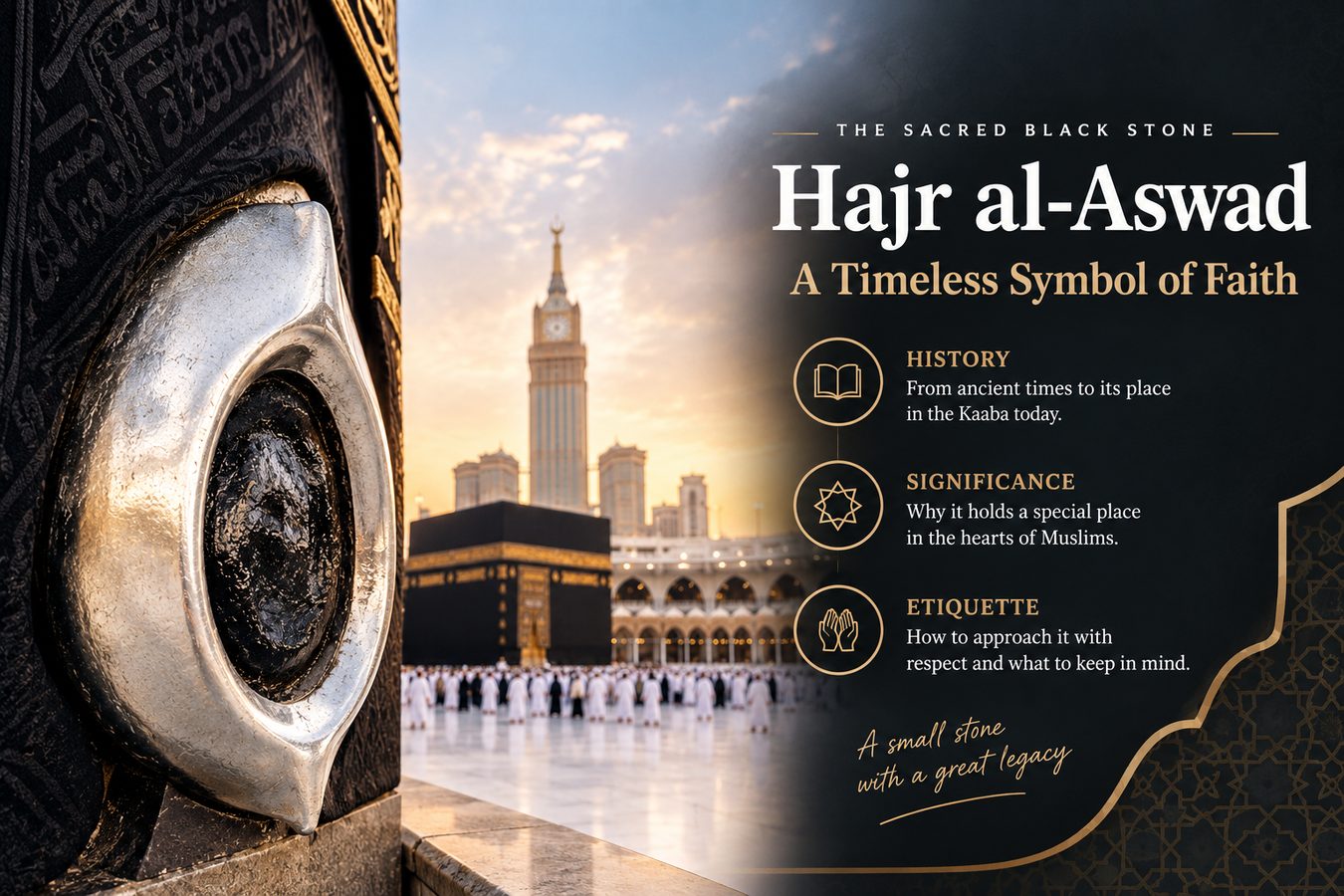
Mounted in the eastern corner of the Holy Kaaba is Hajr al-Aswad, or the Black Stone—one of the most venerated sacred relics in Islamic history. For millions of pilgrims performing Hajj and Umrah each year, reaching or gesturing toward this heavenly stone marks both the beginning and the end of every circumambulation (Tawaf) around the House of Allah SWT.
Understanding its heavenly origins, historical journey, and the correct spiritual etiquette surrounding it allows believers to perform their rituals with deeper understanding and reverence.
The Origin and Spiritual Significance of Hajr al-Aswad
According to authentic Hadith traditions, Hajr al-Aswad is a stone sent down directly from Paradise (Jannah). When Allah SWT commanded Prophet Ibrahim (AS) and his son Prophet Ismail (AS) to rebuild the Kaaba, the Angel Jibreel (Gabriel AS) brought the stone to be set as the starting marker for Tawaf.
1. Originally Whiter Than Milk
Prophet Muhammad (ﷺ) stated in a famous narration:
“The Black Stone came down from Paradise whiter than milk, but the sins of the sons of Adam turned it black.” (Tirmidhi)
The stone serves as a profound physical reminder of the spiritual weight of human transgression and the transformative power of sincere repentance (Tawbah).
2. A Witness on the Day of Judgment
Islamic tradition teaches that Hajr al-Aswad is not merely a inanimate physical object, but a blessed sign from Paradise. The Prophet (ﷺ) mentioned that on the Day of Resurrection, the stone will be granted sight and speech to testify in favor of those who greeted or kissed it with true belief and devotion (Imaan).
The Historical Journey & The Silver Casing
Throughout centuries of Makkah’s history, Hajr al-Aswad has endured floods, fires, and military sieges.
- The Qarmatian Abduction: In 317 AH (930 CE), a rogue sect known as the Qarmatians attacked Makkah and stole the Black Stone, taking it to Eastern Arabia. It remained missing for over two decades before being returned to its rightful place at the Kaaba.
- The Silver Frame: Because the stone was broken into several smaller fragments during historical turmoil, master artisans encased the surviving pieces together inside a protective, hand-poured pure silver frame. Today, eight visible small fragments are held within a dark cement base inside this gleaming teardrop-shaped silver casing.
Sunnah Etiquette: How to Greet the Black Stone (Istilam)
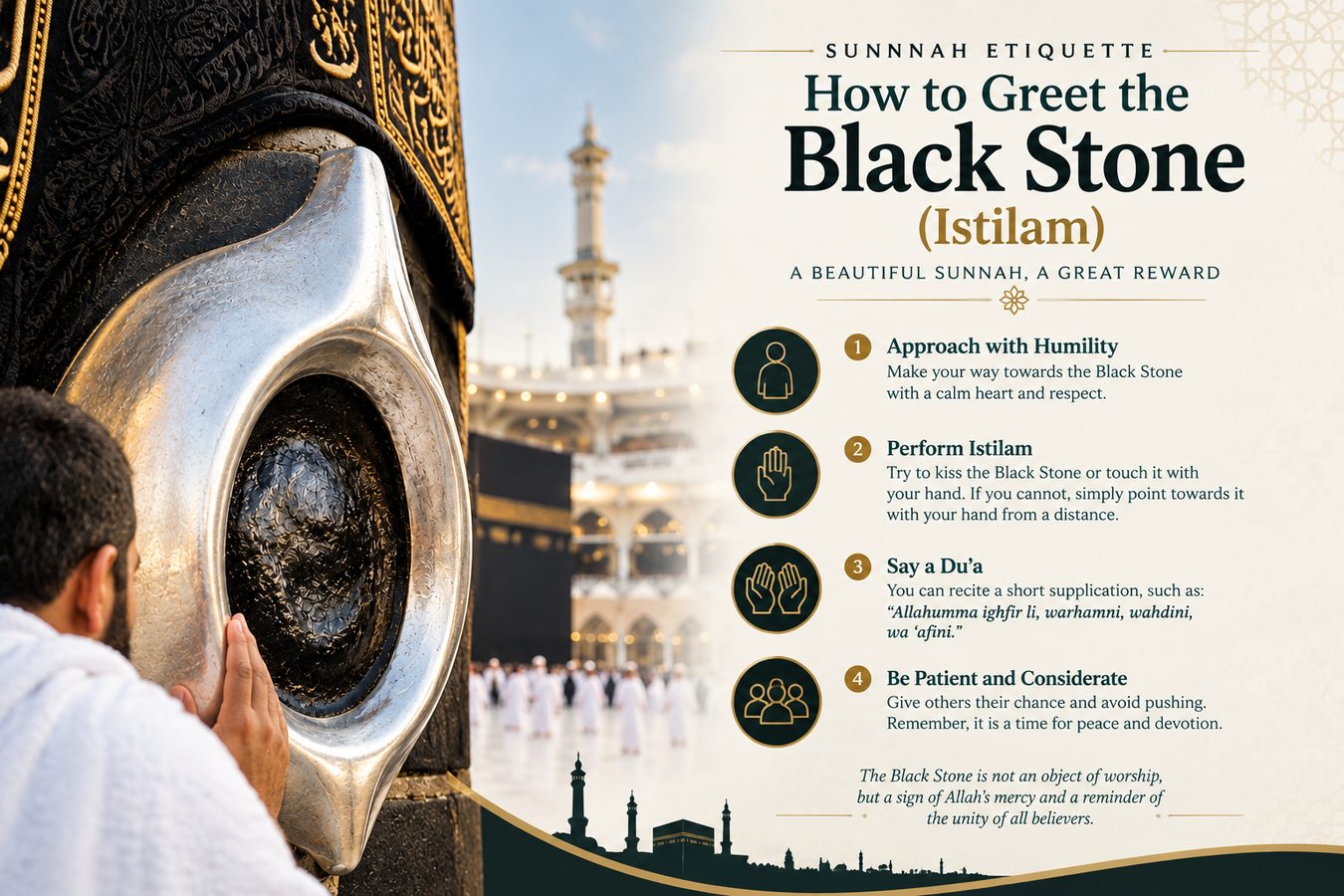
Greeting or touching the Black Stone during Tawaf is known as Istilam. While it is a deeply cherished Sunnah, fulfilling it requires patience, consideration for fellow worshipers, and strict adherence to Islamic manners.
[ TAWAF DIRECTION ]
|
v
+———————————-+
| |
| HOLY KAABA |
| |
| [HAJR AL-ASWAD] <– Start Line |
+———————————-+
|
(Raise Right Hand & Say:
“Bismillahi Allahu Akbar”)
1. The Ideal Sunnah (If Uncrowded)
If the Mataf courtyard is clear and you can reach the stone safely without pushing or causing harm:
- Touch the stone gently with your hands and place your lips upon it to kiss it lightly without making a loud kissing sound.
- Place your forehead against it briefly in quiet reverence, following the example of the Prophet (ﷺ) and Caliph Umar ibn al-Khattab (RA).
2. The Practical Sunnah during Crowds (Istilam from A Distance)
In modern times, with millions of pilgrims circumambulating simultaneously, reaching the stone physically can be extremely difficult and dangerous. It is vital to remember that kissing the stone is a recommended Sunnah, whereas causing harm or shoving fellow believers is forbidden (Haram).
When passing the Black Stone line during Tawaf from a distance:
- Turn your face and upper chest toward the Black Stone corner.
- Raise your right hand toward the stone (palms facing the stone).
- Recite: “Bismillahi, Allahu Akbar” (In the name of Allah, Allah is the Greatest).
- Kiss your hand lightly (or proceed without kissing your hand, according to scholars) and continue your Tawaf continuously without stopping or causing a bottleneck in the crowd.
Preserving the Sacred Connection at Home
For every Muslim who has stood before the Kaaba, the memory of pointing toward or touching Hajr al-Aswad remains etched in their heart forever.
At Kiswah Islamic Store, we honor this sacred connection through our curated collection of certified Kaaba Kiswah textiles and gold-embroidered panels featuring classic Quranic calligraphy. Displaying these blessed reminders in your home helps keep the spirit of Makkah alive in your daily life and family gatherings.
