
Every year during the Hajj season, one of the most remarkable traditions in Islam takes place — the replacement of the Kiswah, the black silk cloth that covers the Holy Kaaba.
Millions of Muslims witness the sacred moment when the new Kiswah is placed over the Kaaba. But a question many people often ask is: what happens to the old Kiswah after it is removed?
The answer reveals a fascinating tradition that connects the Kaaba with Muslim communities around the world.
The Kiswah Is Replaced Every Year
The Kaaba is covered with a magnificent cloth known as the Kiswah, made from high-quality black silk and embroidered with Quranic verses using gold and silver threads.
This sacred cloth is replaced annually as part of the maintenance and honor of the Holy Kaaba. The process is carefully organized and carried out by skilled craftsmen who specialize in producing the Kiswah.
Muslims interested in the history and craftsmanship behind the Kaaba covering often explore the historical background of the Kiswah of the Kaaba, which explains how this tradition developed over centuries.
The Old Kiswah Is Carefully Removed
When the new Kiswah is installed, the previous cloth is respectfully removed piece by piece.
This process is handled with great care and reverence because the Kiswah contains Quranic inscriptions and holds deep spiritual value for Muslims.
Once removed, the cloth is preserved and prepared for the next stage.
The Old Kiswah Is Cut Into Pieces
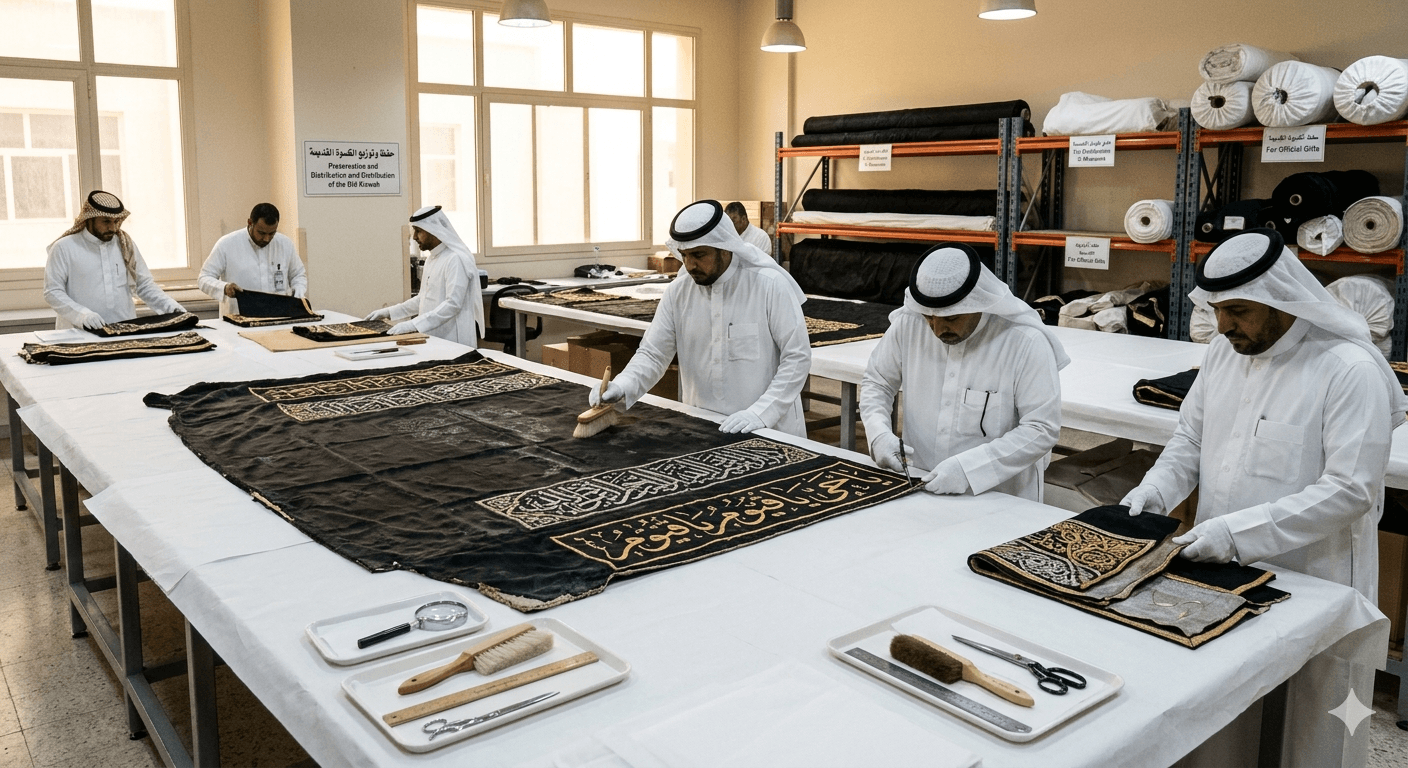
After removal, the old Kiswah is usually cut into smaller sections.
These pieces are preserved as historic and spiritual artifacts connected with the Kaaba. Each piece reflects the beauty of the original embroidery and the sacred environment of Masjid al-Haram.
Because of their rarity and significance, these pieces are highly valued.
Pieces Are Gifted to Important Islamic Institutions
One of the most meaningful traditions associated with the old Kiswah is that parts of it are presented as honorary gifts.
These pieces are sometimes given to:
• Islamic scholars
• museums
• mosques around the world
• dignitaries from Muslim countries
The purpose of distributing these pieces is to share the heritage and spiritual symbolism of the Kaaba with the wider Muslim community.
Some Kiswah Pieces Become Islamic Art
Over time, many pieces of the old Kiswah are framed and preserved as Islamic heritage artifacts.
These framed textiles often appear in:
• Islamic museums
• religious institutions
• historical collections
Inspired by the beauty of the sacred Kaaba covering, many artisans create decor and artistic pieces that reflect the design and elegance of the Kiswah. Collections inspired by this heritage can be explored through Kiswah Islamic Store, where Kaaba-inspired Islamic art celebrates the symbolism of the sacred cloth.
The Kiswah Represents Islamic Unity
The tradition of replacing the Kiswah and sharing pieces of the old cloth reminds Muslims around the world of the central role of the Kaaba in Islamic worship.
Every Muslim faces the Kaaba during daily prayer, and the Kiswah symbolizes the honor and reverence given to the sacred house of Allah.
For believers who wish to keep a reminder of this sacred connection in their homes, Kaaba-inspired Islamic art and heritage designs continue to reflect the beauty of the Kaaba’s covering.
Conclusion
The replacement of the Kiswah is not just a maintenance process — it is a deeply symbolic event in Islamic tradition.
After being removed from the Kaaba, the old Kiswah is carefully preserved, cut into pieces, and distributed to institutions and individuals across the Muslim world. These pieces become cherished reminders of the sacred sanctuary in Makkah.
Through this tradition, the spiritual legacy of the Kaaba continues to reach Muslims far beyond the boundaries of Masjid al-Haram.
FAQ
How often is the Kiswah replaced?
The Kiswah covering the Kaaba is replaced once every year during the Hajj season.
What happens to the old Kiswah?
The old Kiswah is carefully removed, cut into smaller pieces, and distributed as gifts or preserved in museums and Islamic institutions.
Why is the Kiswah so important?
The Kiswah represents the honor given to the Kaaba and contains Quranic inscriptions embroidered with gold and silver threads.
