
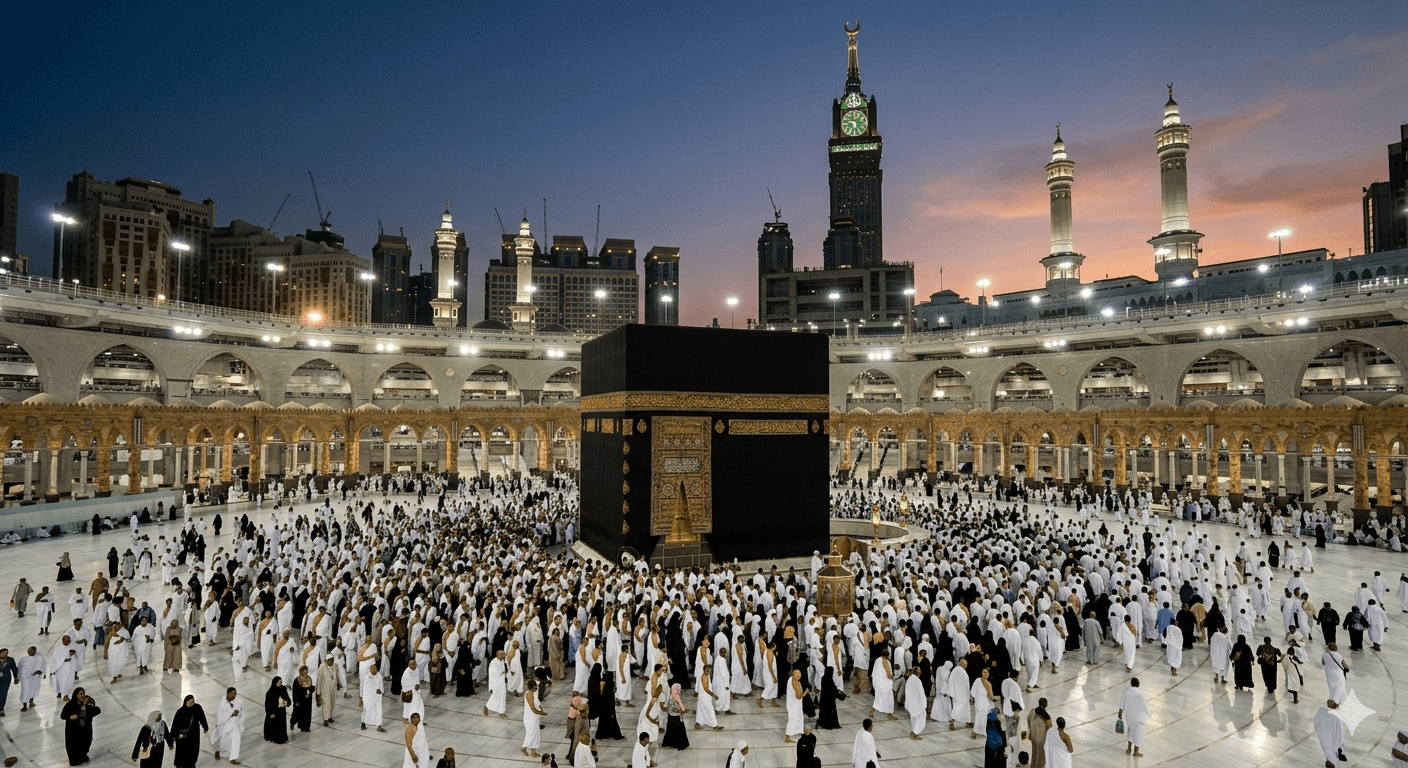
The Kaaba is the most sacred structure in Islam and the spiritual center of Muslim worship. Located in the heart of Masjid al-Haram in Makkah, it is the direction toward which Muslims around the world face during their daily prayers.
Millions of pilgrims gather around the Kaaba each year during Hajj and Umrah, making it one of the most recognized religious landmarks in the world. While many Muslims know its importance, there are several fascinating facts about the Kaaba that deepen our appreciation for its history and significance.
The Kaaba Was First Built by Prophet Ibrahim
According to Islamic tradition, the Kaaba was originally built by Prophet Ibrahim (Abraham) and his son Prophet Ismail as a house dedicated to the worship of Allah.
This sacred structure has been rebuilt several times throughout history due to floods, natural damage, and renovations. The Kaaba continues to symbolize pure monotheism and devotion to Allah.
Those interested in the deeper historical background often explore the detailed historical account of the Kaaba in Islamic history, which explains how the structure evolved over centuries.
The Kaaba Is Covered With the Sacred Kiswah
One of the most recognizable features of the Kaaba is the Kiswah, the black silk cloth that covers it.
The Kiswah is embroidered with Quranic verses using gold and silver threads and represents one of the most beautiful forms of Islamic textile art. It is replaced every year as part of a long-standing tradition connected with the maintenance of the holy sanctuary.
For Muslims who admire the craftsmanship of the Kaaba covering, heritage-inspired pieces reflecting the beauty of the Kiswah can be explored through the collections available at Kiswah Islamic Store, which celebrates Islamic art connected to the sacred cloth.
The Black Stone Is Located on the Kaaba
The Hajr al-Aswad, commonly known as the Black Stone, is embedded in the eastern corner of the Kaaba.
During Tawaf, pilgrims try to touch or kiss the Black Stone as a symbolic act of devotion. This practice dates back to the time of Prophet Muhammad and remains one of the most memorable moments of the pilgrimage for many Muslims.
The Kaaba Has a Door That Is Raised Above Ground
One unusual feature of the Kaaba is that its door is elevated above ground level.
Historically, the door was raised to protect the interior of the Kaaba from floodwater and to control access to the sacred structure. Today, the door is made of gold and is opened only on special occasions.
The Inside of the Kaaba Is Rarely Seen
Although millions of pilgrims visit the Kaaba every year, very few people ever see its interior.
The inside of the Kaaba contains marble floors, pillars, and inscriptions. Only selected individuals are occasionally allowed inside during special cleaning ceremonies.
This mystery surrounding the interior adds to the spiritual fascination of the sacred building.
The Kaaba Is Not Exactly a Perfect Cube
Despite its name, the Kaaba is not a perfect cube.
Its dimensions are slightly rectangular, measuring different lengths on each side. However, its symbolic meaning remains far more important than its geometry.
The structure continues to stand as the spiritual center of Islamic worship.
Millions of Muslims Circumambulate the Kaaba Every Year
One of the most powerful sights in the Muslim world is the Tawaf, the act of circling the Kaaba during pilgrimage.
Pilgrims walk around the Kaaba seven times while offering prayers and supplications. This act represents unity, humility, and devotion to Allah.
Conclusion
The Kaaba is far more than a physical structure. It represents the unity of the Muslim Ummah and the center of Islamic worship.
From its construction by Prophet Ibrahim to the beautiful Kiswah that covers it today, the Kaaba continues to inspire millions of believers across the world.
For Muslims who feel spiritually connected to the Kaaba, many heritage-inspired Islamic art pieces and Kiswah themed items are available through Kiswah Islamic Store, allowing believers to keep a reminder of the sacred sanctuary in their homes.
FAQ
Why is the Kaaba important in Islam?
The Kaaba is the holiest site in Islam and the direction Muslims face during prayer.
Who built the Kaaba?
According to Islamic belief, the Kaaba was rebuilt by Prophet Ibrahim and his son Prophet Ismail.
What is the cloth covering the Kaaba called?
The black cloth covering the Kaaba is called the Kiswah.
