
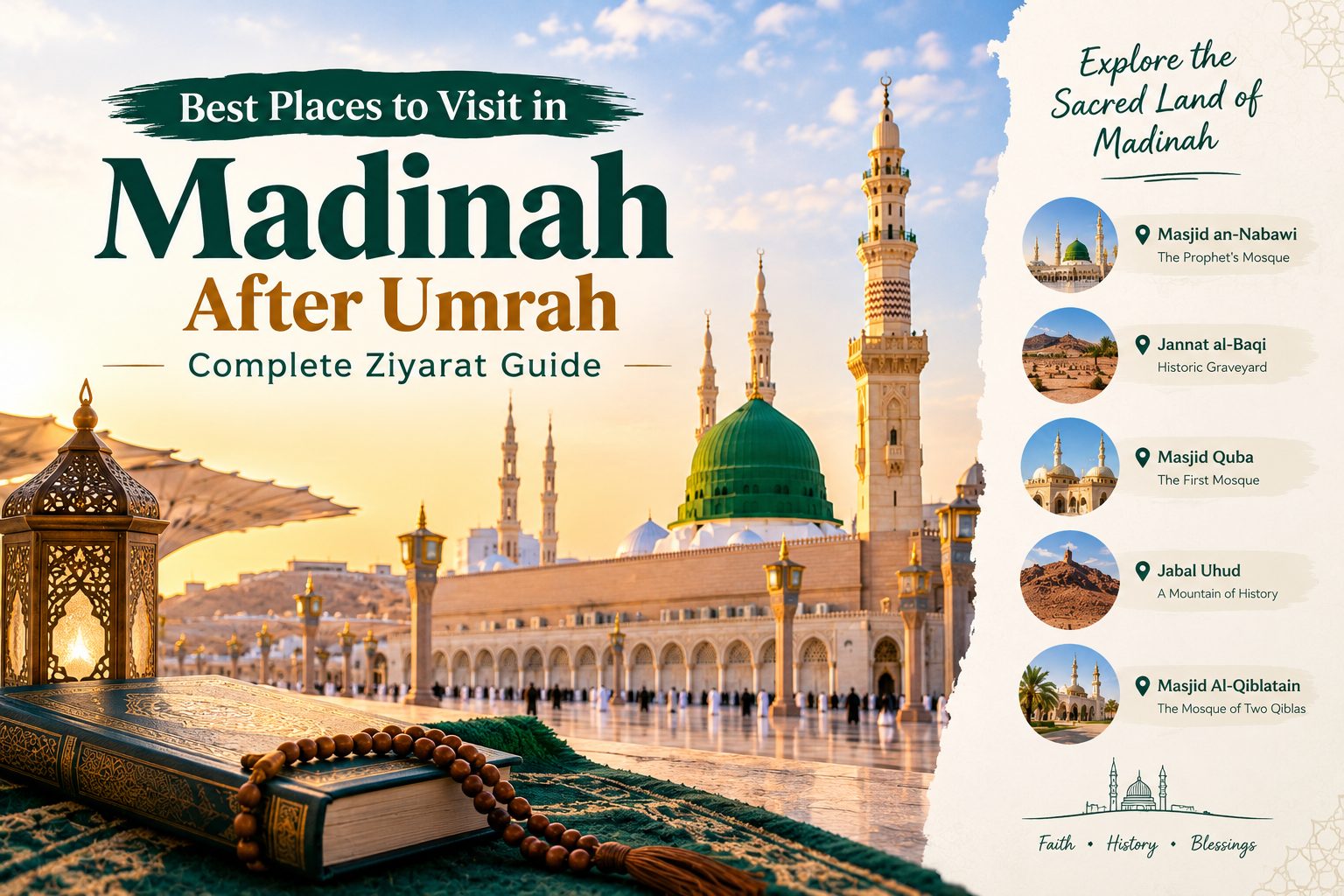
Madinah is one of the most cherished destinations in the Islamic world. After completing Umrah in Makkah, many pilgrims travel to Madinah to pray at the Prophet’s Mosque, explore important Islamic landmarks, and learn more about the history of Islam. From peaceful mosques to historic battlefields, the city offers meaningful experiences for visitors of every age.
This complete guide to the best places to visit in Madinah after Umrah will help you plan your journey, discover significant Ziyarat locations, and make the most of your time in the blessed city.
1. Al-Masjid an-Nabawi: The Prophet’s Mosque
Al-Masjid an-Nabawi is the main destination for Muslims visiting Madinah. Established by Prophet Muhammad ﷺ after his migration from Makkah, this mosque holds exceptional religious importance.
Visitors come to offer prayers, send blessings upon the Prophet ﷺ, and experience the peaceful atmosphere of the mosque. The Rawdah, an especially revered area within the mosque, is also an important destination for pilgrims. Entry arrangements and permits may apply, so check the latest official guidance before your visit.
Travel tip: Allow sufficient time for prayers and follow the mosque’s entry instructions, especially during busy pilgrimage seasons.
2. Masjid Quba: A Historic Islamic Landmark
Masjid Quba is among the most significant mosques in Islamic history. It is associated with the Prophet’s migration to Madinah and the establishment of the early Muslim community.
Many pilgrims include Masjid Quba in their Madinah Ziyarat itinerary to pray and reflect on the foundations of Islam in the city. Its importance makes it a worthwhile stop for first-time visitors and returning pilgrims alike.
Travel tip: Visit at a convenient time and check current access arrangements before travelling.
3. Masjid al-Qiblatayn: The Mosque of Two Qiblas
Masjid al-Qiblatayn is famous for its association with the change in the direction of Muslim prayer from Jerusalem towards the Kaaba in Makkah.
This historic event represents an important moment in the development of the Muslim community. Visiting the mosque can help pilgrims understand the significance of the Qibla and the central role of the Kaaba in Islamic worship.
For visitors interested in Islamic history, this mosque is an excellent addition to a Madinah sightseeing plan.
4. Mount Uhud: Discover an Important Chapter of Islamic History
Mount Uhud is closely associated with the Battle of Uhud, a major event in the early history of Islam. The battle offers enduring lessons about patience, discipline, sacrifice, and faith.
The surrounding area is also connected with Hamza ibn Abdul Muttalib (may Allah be pleased with him) and other martyrs of the battle. Visitors can learn about these historical events while appreciating the landscape.
Travel tip: Carry water, wear comfortable footwear, and avoid unsafe climbing areas, particularly during hot weather.
5. Uhud Martyrs Cemetery
Located near Mount Uhud, the Uhud Martyrs Cemetery commemorates those who lost their lives during the Battle of Uhud. Many pilgrims visit the area to remember the sacrifices made by the early Muslim community.
The cemetery provides an opportunity for reflection and remembrance. Visitors should maintain a respectful atmosphere and follow any local restrictions regarding access.
6. Jannat al-Baqi: A Historic Cemetery
Jannat al-Baqi is situated near Al-Masjid an-Nabawi and is one of Madinah’s most historically significant cemeteries. Many companions of the Prophet Muhammad ﷺ and members of his family are buried there.
The site reminds visitors of the temporary nature of worldly life and the importance of remembering the Hereafter. Access arrangements may change, so check the current visiting rules before including it in your itinerary.
7. The Seven Mosques Area
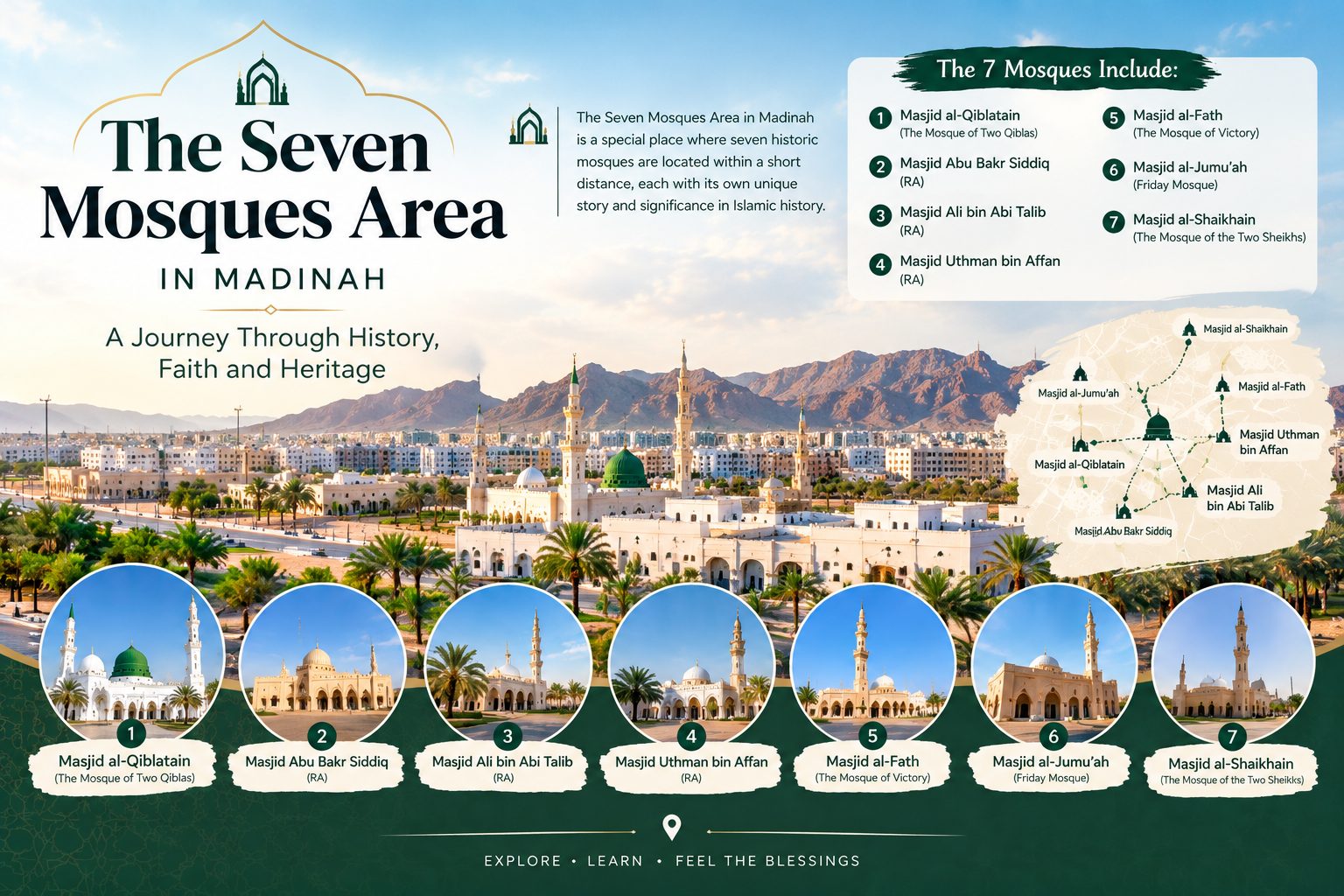
The Seven Mosques area is associated with the Battle of the Trench, also known as the Battle of Khandaq. This battle was an important event in which the early Muslim community defended Madinah.
The area is a popular stop for visitors interested in learning about the challenges faced by the first Muslims. A knowledgeable guide can provide helpful historical context and explain the significance of the surrounding landmarks.
8. Madinah Dates Market: Discover Local Specialities
Madinah is well known for its dates, including Ajwa, Safawi, and Sukkari varieties. Exploring a local dates market is a popular activity for pilgrims who want to purchase gifts for family and friends.
Compare the freshness, packaging, and prices of different varieties before making a purchase. Buying from reputable sellers can help you make a more informed choice.
Travel tip: Ask about the variety and origin of the dates rather than assuming every product labelled premium has the same quality.
9. Dar Al Madinah Museum: Learn About the City’s Heritage
For travellers who want to explore beyond mosques and outdoor landmarks, Dar Al Madinah Museum offers insight into the city’s Islamic heritage and historical development.
Depending on the exhibitions available, visitors may discover historical models, maps, and displays that explain important events associated with Madinah. It can be a useful stop for families and anyone who wants to understand the historical background of the places they visit.
Check opening hours and ticket arrangements before travelling.
10. Islamic Gifts and Kaaba Kiswah Calligraphy
After completing Umrah and Ziyarat, many pilgrims look for meaningful keepsakes to remember their journey. Islamic calligraphy, framed Arabic artwork, and thoughtfully selected Islamic gifts can serve as lasting reminders of a spiritual experience.
Some collectors also explore Kaaba Kiswah calligraphy and framed Kiswah-related memorabilia. If you are researching where to buy Kaaba Kiswah, take time to examine the seller’s information, product description, and evidence of provenance.
Questions such as “How do I buy authentic Kaaba Kiswah?” and “Can you buy Kaaba Kiswah online?” deserve careful consideration. Not every item advertised as an original Kiswah fragment is necessarily authentic, and documentation should be evaluated rather than accepted without question.
Explore the available Islamic gifts Kiswah Islamic Store. Review individual product details and authenticity information before purchasing any item represented as an original Kaaba Kiswah piece.
Practical Tips for Planning Your Madinah Ziyarat
A well-organised itinerary can make your visit more comfortable.
- Plan your route: Group nearby attractions together to reduce travel time.
- Check visiting arrangements: Confirm mosque access, opening hours, and permit requirements.
- Dress modestly: Respect the religious nature of each location.
- Stay hydrated: Carry water when visiting outdoor landmarks.
- Travel comfortably: Wear suitable footwear and allow time for rest.
- Follow local guidance: Respect restrictions at mosques, cemeteries, and historic sites.
- Avoid rushing: Leave enough time for prayer, learning, and personal reflection.
Depending on your schedule, one or two days may be sufficient to explore several major sites, while a longer stay allows a more relaxed experience.
Frequently Asked Questions
What are the best places to visit in Madinah after Umrah?
The main destinations include Al-Masjid an-Nabawi, Masjid Quba, Masjid al-Qiblatayn, Mount Uhud, the Uhud Martyrs Cemetery, Jannat al-Baqi, and the Seven Mosques area.
Is Madinah Ziyarat compulsory after Umrah?
No. Visiting Madinah is not a compulsory part of Umrah. However, many pilgrims choose to visit the city for its religious significance and Islamic heritage.
How much time is needed for Madinah Ziyarat?
One or two days may be enough to visit several major landmarks. Your schedule will depend on transport, weather, visiting restrictions, and how much time you wish to spend at each location.
Can I buy authentic Kaaba Kiswah online?
Some sellers offer Kiswah-related products and memorabilia online. Before purchasing an item described as authentic, check its provenance, supporting documentation, and the seller’s transparency.
Conclusion
Madinah offers pilgrims an opportunity to connect with Islamic history, visit significant religious landmarks, and reflect on the life and teachings of Prophet Muhammad ﷺ. From Al-Masjid an-Nabawi and Masjid Quba to Mount Uhud and the historic cemeteries, every stop can add meaning to your journey.
Use this Madinah Ziyarat guide to plan your visit thoughtfully, confirm local arrangements, and enjoy a respectful and memorable experience.
Continue exploring Islamic heritage after your pilgrimage. Visit Kiswah Islamic Store to discover available Islamic gifts and calligraphy products. Choose carefully, review product information, and select a meaningful keepsake to remember your spiritual journey.
