
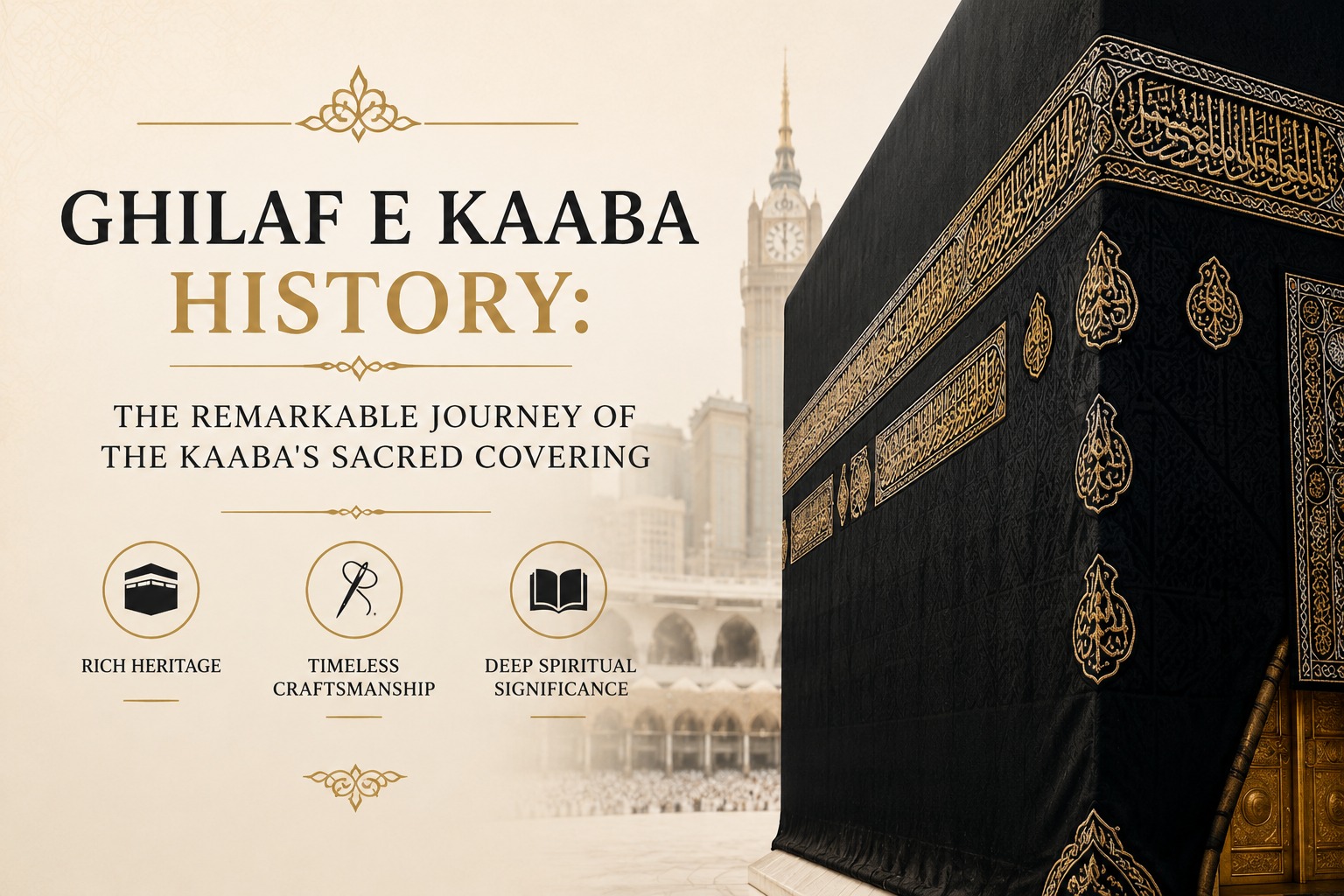
The Ghilaf e Kaaba, also known as the Kiswah, is one of the most recognizable symbols of the Islamic world. Covering the Holy Kaaba in Masjid al-Haram, Makkah, it represents centuries of faith, devotion, and exceptional craftsmanship. Every year, millions of Muslims performing Hajj and Umrah witness the beauty of the black silk cloth embroidered with verses from the Holy Quran.
The Ghilaf e Kaaba history spans many centuries and reflects the evolution of Islamic culture, artistry, and respect for the Sacred House. From early coverings made of simple fabrics to today’s magnificent silk Kiswah, the story of the Ghilaf e Kaaba is both inspiring and historically significant.
What Is the Ghilaf e Kaaba?
The Ghilaf e Kaaba is the cloth that covers the Holy Kaaba. Today, it is made from premium black silk and decorated with intricate Quranic calligraphy embroidered using gold- and silver-colored thread.
Although the modern Kiswah has a distinctive appearance, the covering has changed in style, material, and color throughout history while maintaining its sacred purpose.
The Early History of the Ghilaf e Kaaba
Historical records indicate that the tradition of covering the Kaaba began long before the modern era. Arab tribes and later Muslim rulers honored the Holy Kaaba by placing protective coverings over it.
After the advent of Islam, this tradition continued and gradually became an established practice. Over the centuries, different rulers sponsored the production of the Kiswah as a sign of respect and service to Islam’s holiest site.
Different Colors Used Throughout History
Many people associate the Kaaba only with its famous black covering. However, historical sources mention that the Kiswah was not always black.
Over different periods, coverings of various colors have been recorded, including:
- White
- Red
- Green
- Yellow
- Black
These changes reflected historical customs, textile availability, and artistic traditions rather than any change in the religious significance of the Holy Kaaba.
The Evolution of Materials
The earliest coverings were made from materials available during their respective periods. As textile production advanced, the quality of the Ghilaf improved significantly.
Today, the Kiswah is crafted from high-quality natural silk and features detailed embroidery created by skilled artisans. Every stage of production is completed with great precision to preserve the dignity of the Holy Kaaba.
When Did the Black Kiswah Become the Standard?
Over time, black silk became the preferred material for the Kaaba’s covering. Its elegant appearance, combined with beautifully embroidered Quranic verses, established the iconic design recognized throughout the Muslim world today.
The black Kiswah has remained the traditional covering for many generations and continues to symbolize unity, reverence, and excellence in Islamic craftsmanship.
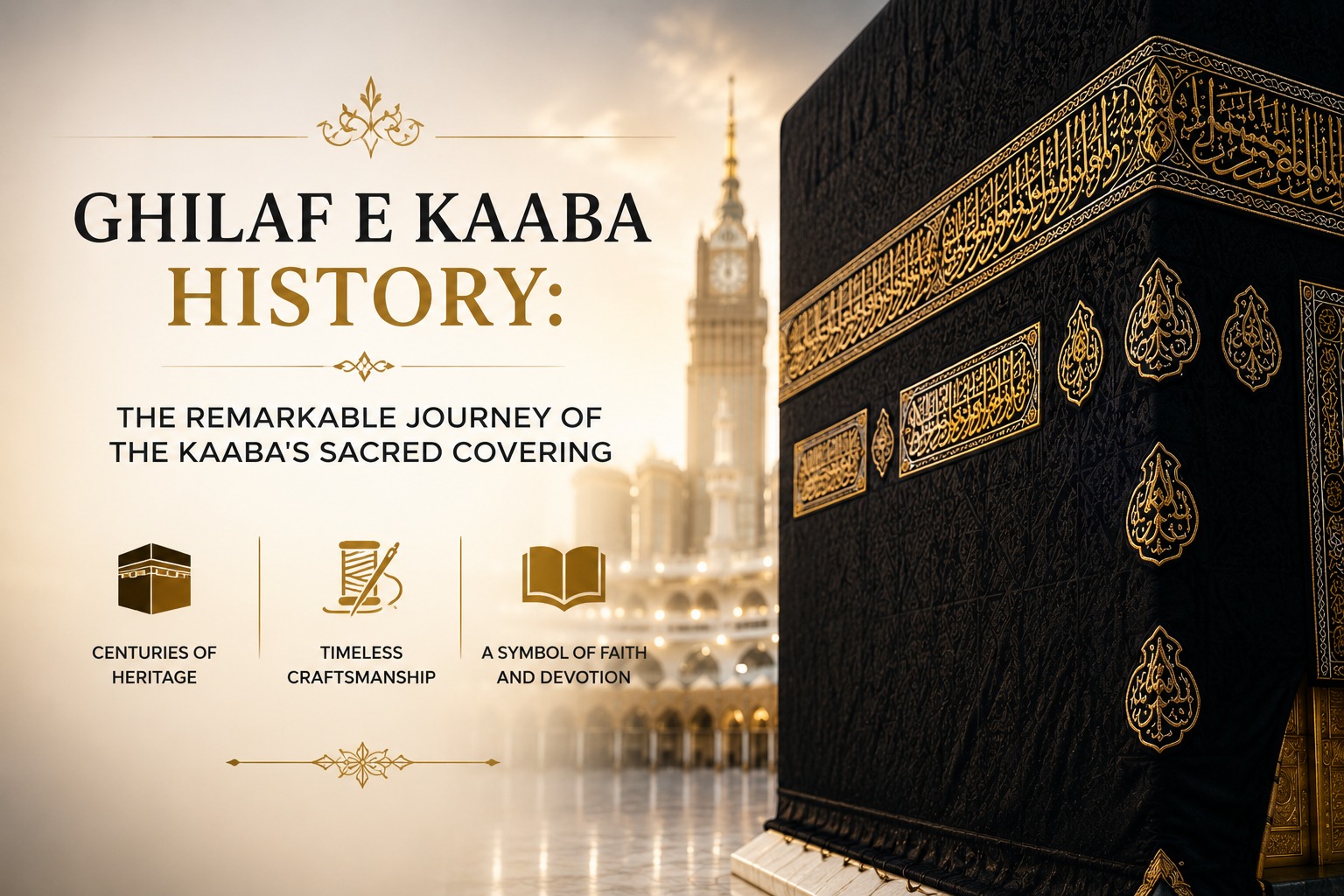
One of the most remarkable traditions in Islamic history is the annual replacement of the Ghilaf e Kaaba.
Each year, a newly crafted Kiswah is carefully installed over the Holy Kaaba while the previous covering is respectfully removed. This long-standing tradition reflects continuous care for the Sacred House and preserves the excellence associated with the Kiswah.
The Art of Creating the Kiswah
Producing the Ghilaf e Kaaba requires months of careful work by highly skilled artisans.
The process includes:
- Selecting premium-quality silk
- Dyeing and preparing the fabric
- Designing Quranic calligraphy
- Embroidering verses with gold- and silver-colored thread
- Precision stitching and assembly
- Detailed quality inspection
Every completed Kiswah reflects extraordinary artistic and technical skill.
What Happens to the Old Ghilaf e Kaaba?
After the annual replacement, the previous Kiswah is respectfully preserved. Historically, parts of the old covering have been presented to museums, Islamic institutions, distinguished guests, and other appropriate recipients.
Today, authentic pieces of the original Kiswah are highly valued because of their historical significance and rarity. Collectors seeking genuine sections should always purchase from trusted and transparent sources.
Why the Ghilaf e Kaaba Is So Important
The Ghilaf e Kaaba represents much more than a beautiful textile.
It symbolizes:
- Respect for the Holy Kaaba
- Islamic artistic heritage
- Generations of skilled craftsmanship
- The unity of Muslims around the world
- A centuries-old tradition that continues today
Its beauty reflects both devotion and the remarkable history of Islamic civilization.
Conclusion
The Ghilaf e Kaaba history tells the story of a sacred tradition that has evolved over many centuries. From early fabric coverings to today’s magnificent black silk Kiswah, every stage of its development reflects dedication, craftsmanship, and profound respect for the Holy Kaaba.
Understanding the history of the Ghilaf e Kaaba allows us to appreciate not only its artistic beauty but also its enduring place in Islamic heritage. As millions of Muslims continue to visit the Holy Kaaba each year, the Kiswah remains a timeless symbol of faith, unity, and devotion that inspires believers across the world.
