
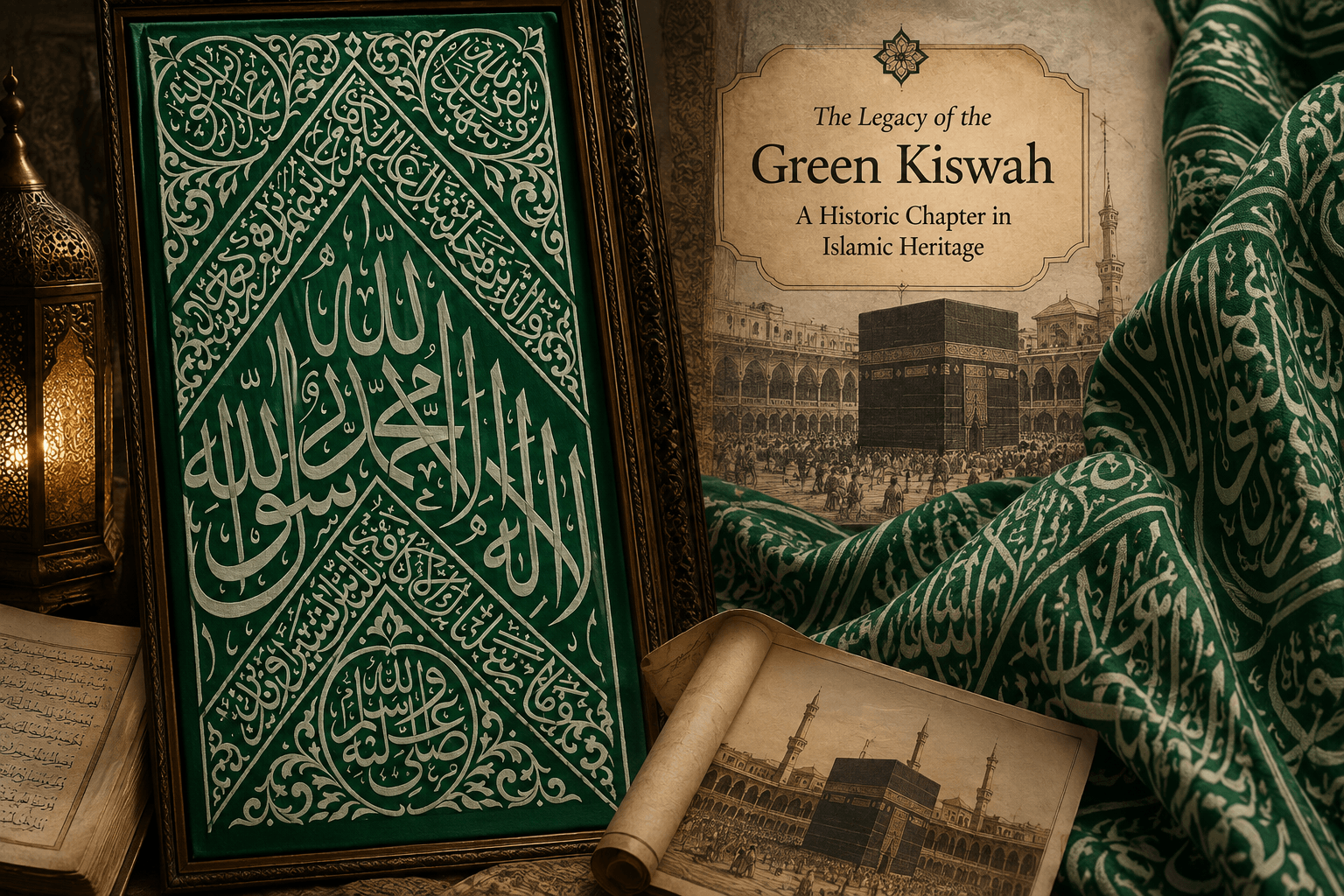
The Green Kiswah Kaaba is a fascinating subject for anyone interested in the history of the Holy Kaaba and the evolution of its sacred covering. Today, Muslims around the world recognize the Kaaba by its elegant black Kiswah embroidered with Quranic verses in gold-colored thread. However, historical sources indicate that the Kiswah was not always black. Over different periods, various colors—including white, red, yellow, and green—have been associated with the Kaaba’s covering.
The story of the Green Kiswah Kaaba offers valuable insight into the historical development of one of Islam’s most revered traditions.
What Is the Kiswah?
The Kiswah is the cloth that covers the Holy Kaaba in Masjid al-Haram, Makkah. It is crafted from high-quality silk and decorated with beautifully embroidered Quranic calligraphy.
Replacing the Kiswah is an important annual tradition that reflects centuries of Islamic craftsmanship and respect for the Sacred House. Although today’s Kiswah is black, historical records describe earlier coverings in different colors.
Did the Kaaba Ever Have a Green Kiswah?
Historical Islamic literature contains references indicating that the Kaaba was covered with fabrics of different colors during various periods. Among these references are accounts of a Green Kiswah Kaaba, suggesting that green cloth was used during certain historical eras before black became the standard color.
These historical accounts demonstrate that the appearance of the Kiswah evolved over time while the religious significance of the Holy Kaaba remained unchanged.
Why Was Green Chosen?
Green has long held cultural and symbolic importance in Islamic history. While historical sources differ regarding specific periods and rulers, green was one of several colors mentioned in connection with the Kaaba’s covering.
The use of different colors often reflected the textile traditions, available materials, and artistic preferences of the time rather than changes in religious practice.
The Evolution of the Kiswah
The history of the Kiswah shows a gradual evolution over many centuries. Historical references mention several colors before black became the established tradition, including:
- White
- Green
- Red
- Yellow
- Black
Each stage reflects developments in textile production and Islamic craftsmanship while preserving the honor given to the Holy Kaaba.
When Did Black Become the Standard?
As Islamic history progressed, black silk became the preferred color for the Kiswah. Combined with intricate Quranic embroidery, the black covering developed into the iconic appearance recognized throughout the Muslim world today.
The annual replacement of the black Kiswah continues to symbolize respect, unity, and devotion.
The Craftsmanship Behind Every Kiswah
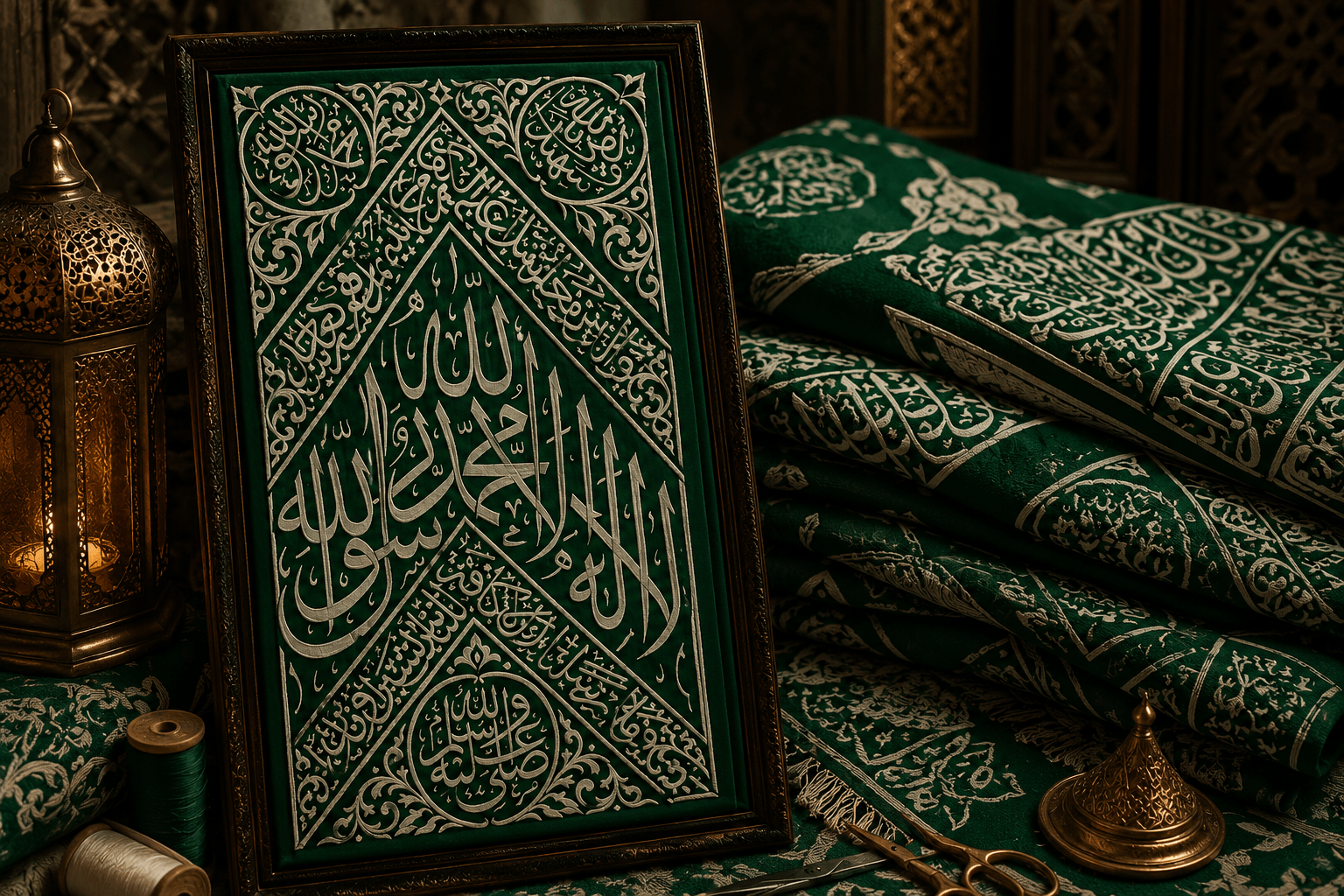
Regardless of its color, every Kiswah has always required extraordinary skill and attention to detail.
The creation process includes:
- Weaving premium-quality silk
- Embroidering Quranic verses
- Designing decorative Islamic patterns
- Precision stitching
- Careful quality inspection
These techniques ensure that each Kiswah reflects exceptional artistry.
Why the Green Kiswah Remains Historically Interesting
The Green Kiswah Kaaba continues to attract historians because it illustrates how the Kaaba’s covering changed throughout different historical periods.
Studying these early traditions helps researchers better understand Islamic history, textile production, and the artistic heritage connected with the Holy Kaaba. It also highlights the rich cultural journey that eventually led to the modern black Kiswah.
Authentic Kaaba Kiswah Today
Today, authentic Kaaba Kiswah pieces available to collectors come from the modern black Kiswah that covers the Holy Kaaba. These original sections are admired for their craftsmanship, historical importance, and connection to one of Islam’s holiest sites.
When purchasing a Kiswah piece, buyers should always choose reputable sellers who provide clear product details and authenticity information.
Conclusion
The history of the Green Kiswah Kaaba reflects the remarkable evolution of the Holy Kaaba’s sacred covering over many centuries. Although the black Kiswah has become the enduring symbol recognized worldwide, historical references to green and other colors reveal a rich tradition of craftsmanship and cultural development.
Learning about the Green Kiswah allows us to appreciate not only the beauty of the Kaaba’s covering but also the deep historical legacy that continues to inspire Muslims around the world.
