
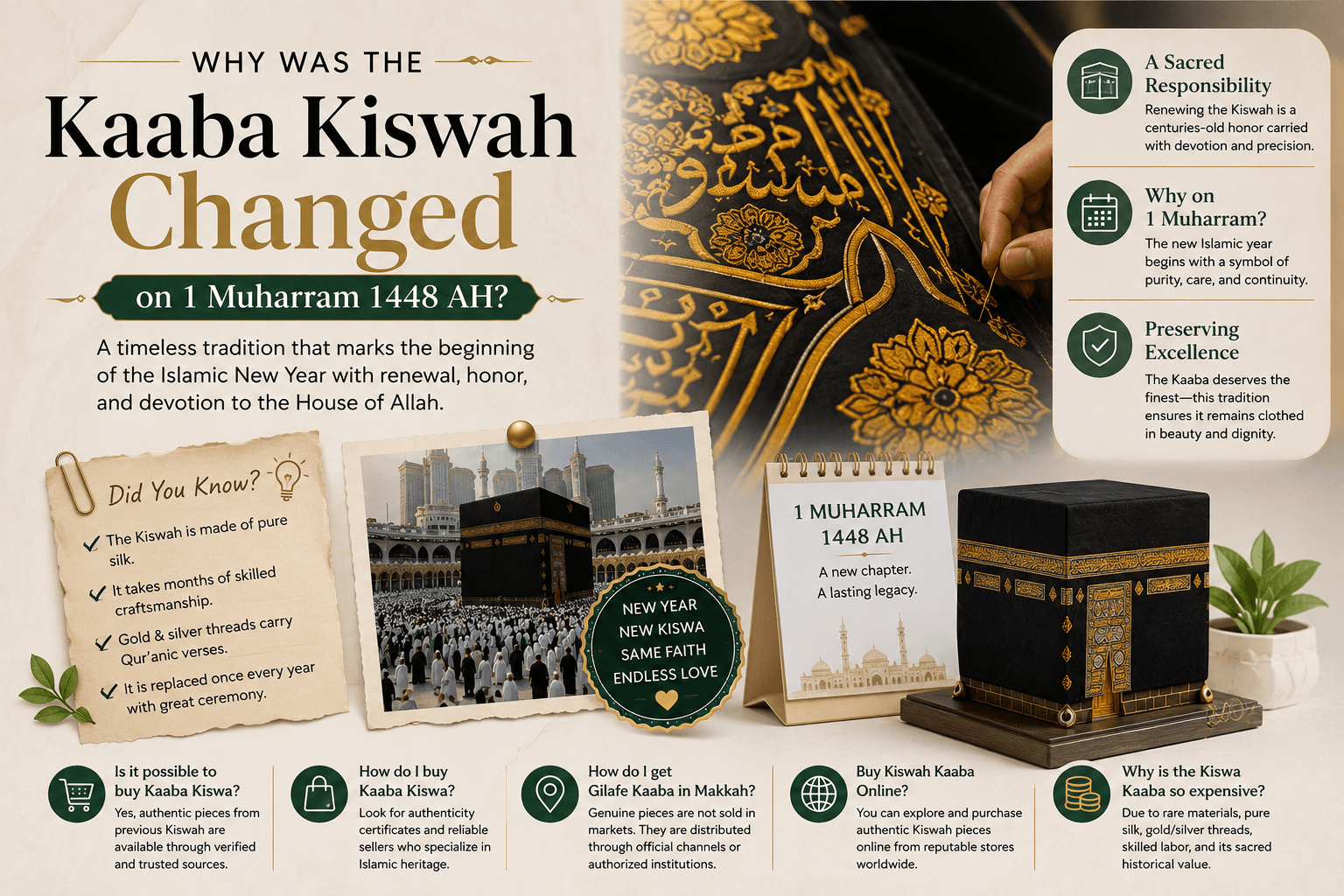
The beginning of a new Islamic year often encourages reflection, learning, and a renewed appreciation of important Islamic traditions. On 1 Muharram 1448 AH, one of the most widely discussed events in the Muslim world was the replacement of the Kiswah covering the Holy Kaaba. Images and videos of the installation quickly spread across the globe, prompting many people to ask why this change takes place and what significance it holds.
For Muslims, the Kaaba is not simply a structure located in Makkah. It is the direction of prayer, a symbol of unity, and a place deeply connected to faith. Because of this special status, every aspect associated with the Kaaba naturally attracts attention, including its famous black covering known as the Kiswah.
The replacement of the Kiswah is an event that combines history, craftsmanship, tradition, and spiritual significance. Although the practice has existed for generations, each annual installation continues to inspire interest among Muslims and non-Muslims alike.
Understanding the Importance of the Kiswah
The Kiswah is the cloth that covers the exterior of the Holy Kaaba. Recognized throughout the world for its elegant appearance, it has become one of the most familiar symbols associated with Islam.
Its distinctive design and detailed decorative elements make it instantly recognizable. For many visitors to Makkah, seeing the Kiswah in person becomes one of the most memorable moments of their journey.
The covering serves a symbolic purpose that goes beyond its physical appearance. It reflects the honor and respect associated with the Kaaba while preserving a tradition that has continued through many generations.
Why Is the Kiswah Replaced?
A common misconception is that the Kiswah is changed because it becomes damaged beyond use. While exposure to environmental conditions plays a role, the annual replacement is primarily connected to a long-standing tradition.
The installation of a new Kiswah allows the covering of the Kaaba to remain in excellent condition while continuing a practice that has been observed for many years. The process reflects dedication to preserving the appearance and significance of one of Islam’s most important landmarks.
When the new Islamic year begins, the arrival of a newly prepared Kiswah symbolizes continuity. It serves as a reminder that certain traditions remain important regardless of how much the world changes.
Why Was the Kiswah Changed on 1 Muharram 1448 AH?
The replacement on 1 Muharram 1448 AH followed the established custom of renewing the covering at the beginning of the Islamic year. The event marked the transition into a new year while maintaining a tradition that Muslims around the world have witnessed repeatedly over time.
For many believers, the replacement carries symbolic meaning. It reflects renewal, care, and the ongoing preservation of Islamic heritage. The annual installation demonstrates that traditions associated with the Holy Kaaba continue to receive careful attention.
Although millions of people may never witness the process in person, the event remains important because of its connection to one of the most sacred sites in Islam.
Global Interest in the New Kiswah
Every year, interest in the Kiswah extends far beyond Saudi Arabia. News reports, photographs, and online discussions introduce the event to audiences across different countries.
Many people become interested in the craftsmanship involved, while others focus on the history behind the annual replacement. Some are simply curious about the significance of the tradition.
As awareness grows, searches related to the Kiswah often increase significantly. Questions about ownership, authenticity, and availability become common as people seek to learn more about the sacred covering.
Is It Possible to Buy Kaaba Kiswa?
One of the questions frequently searched online is, “Is it possible to buy Kaaba Kiswa?”
The answer depends on what type of item is being discussed. Authentic pieces associated with previous Kiswah coverings are considered rare and attract considerable attention. Their limited availability naturally increases public interest.
At the same time, there are also decorative products inspired by the appearance of the Kiswah. These items allow individuals to display artwork influenced by Islamic heritage while appreciating the beauty associated with the Kaaba.
Because interest continues to grow, many people spend time researching the differences between original Kiswah-related items and decorative alternatives.
How Do I Buy Kaaba Kiswa?
Another popular search phrase is “How do I buy Kaaba Kiswa?”
People asking this question are often looking for guidance about authenticity, sourcing, and documentation. Since interest in Kiswah-related items extends across different countries, many individuals begin their research online.
Before considering any purchase, it is generally wise to learn about the background of the item being offered. Understanding its origin, history, and supporting information can help buyers make informed decisions.
Research plays an important role because products connected to Islamic heritage often attract both collectors and enthusiasts.
Buy Kiswah Kaaba Online: Growing Worldwide Interest
The phrase “Buy Kiswah Kaaba Online“ has become increasingly common as more people use digital platforms to explore Islamic products.
Online marketplaces and specialized stores have made it easier for people to discover Kaaba-inspired décor, framed artwork, and other heritage-related items regardless of where they live.
The internet has also created opportunities for individuals to learn more about the history of the Kiswah before making any decisions. Educational content, photographs, and detailed descriptions allow people to explore the subject in greater depth than ever before.
This growing accessibility has contributed to rising global interest in the Kiswah and its significance.
How Do I Get Gilafe Kaaba in Makkah?
Visitors traveling to the holy city frequently ask, “How do I get Gilafe Kaaba in Makkah?”
The question reflects the fascination many people have with objects connected to Islamic history and heritage. Individuals often hope to return from their journey with meaningful reminders of their visit.
As a result, people spend time researching available options, authenticity considerations, and the background of various Kiswah-related items.
Understanding the difference between heritage-inspired products and rare authentic pieces is an important part of that process.
Why Is the Kiswa Kaaba So Expensive?
Among the most frequently discussed topics is the question, “Why is the Kiswa Kaaba so expensive?”
Several factors contribute to this perception. Rarity is one reason. Items connected to highly respected traditions naturally attract greater interest than ordinary products.
Another factor is craftsmanship. The creation of a Kiswah involves specialized skills, detailed work, and significant preparation. The time and expertise required contribute to its reputation for exceptional quality.
Additionally, historical and cultural significance play a role. Objects associated with important traditions often carry value that extends beyond physical materials alone.
For many people, the appeal lies not only in the item itself but also in the story, heritage, and symbolism connected to it.
A Tradition That Continues to Inspire
The replacement of the Kaaba Kiswah on 1 Muharram 1448 AH reminds Muslims of the enduring importance of preserving traditions that connect generations.
While the event lasts only a short period, its impact extends much further. It encourages reflection on history, craftsmanship, faith, and the continuing significance of the Holy Kaaba in the lives of Muslims around the world.
As each new Islamic year begins, the installation of a fresh Kiswah serves as a visible reminder of continuity and care. The tradition continues to inspire curiosity, admiration, and appreciation among people from many different backgrounds.
Whether someone is interested in Islamic history, cultural heritage, or simply learning more about the traditions surrounding the Holy Kaaba, the annual replacement of the Kiswah remains one of the most fascinating events of the Islamic calendar. Its significance reaches far beyond the fabric itself, reflecting a tradition that continues to be respected and remembered year after year.
